Every wine lover has one — the bottle, style, or moment that quietly pulled them into a much bigger world. Before we learned to parse acidity, tannin, terroir, or vintage variation, we had a gateway wine: something that simply tasted good and made us want another glass.
For me, that gateway was White Zinfandel.
Growing up in the Midwest, where wine sales were tightly controlled under the three-tier system, exposure to wine was limited. Like many people, I developed a benchmark based on what was available. Just as your childhood spaghetti sauce becomes the yardstick against which all others are measured, your first enjoyable wine becomes the reference point for everything that follows.
Once I moved past the college “garbage can cocktail” phase and began paying attention to what was actually in my glass, I landed squarely in White Zinfandel territory. But I was already particular. It had to be Sutter Home or Beringer, just sweet enough to be charming but not cloying, low in alcohol, and poured into a proper stemmed glass. Even better, it came from Napa Valley — a name that, at the time, felt synonymous with sunshine, glamour, and endless vineyards. I was hooked.

Not long after, California friends began visiting bringing bottles of red wine, and curiosity took over. Like many drinkers, I gravitated first toward red Zinfandel and Merlot — fruit-forward, supple, and more immediately welcoming than Cabernet Sauvignon. At that stage, I couldn’t have described acidity or tannin, but I knew which wines felt friendly and which felt severe.
Most wine lovers follow some version of this path. Some remain happily devoted to sweeter styles (White Zinfandel, by the way, is still included in Master of Wine and WSET exams — it is a uniquely American category). Others continue on, discovering that acidity makes wine sing with food, while tannin turns a simple glass into something contemplative beside a fireplace and with a cigar.
I vividly remember trying to sort wines into “food wines” and “cocktail wines.” Back then, high-acid wines felt aggressive. Today, they feel like energy, precision, and freshness. The palate evolves.
Even after decades of tasting, judging, traveling, and visiting wineries around the world, we all have a ceiling — for most of us, it’s price. I would love to drink Dujac regularly. I’ve walked the vineyards with Jeremy Seysses in Burgundy, discussing organic and biodynamic farming and the choices he makes to refine his Pinot Noir. But those bottles are aspirational, not everyday.
It’s important to find your own list of go-to wines, but every wine journey begins with curiosity and a palate willing to welcome new tastes. Over time, that curiosity becomes a personal library of flavors, shaped by a growing palate and the pleasure it brings. A gateway wine simply marks where that journey begins.
These days, what ends up in my glass looks very different — but it’s still guided by that same instinct for pleasure and balance.
The following isn’t a comprehensive list — it’s a snapshot of the producers I return to because they consistently deliver wines that express their place, show balance and depth, and offer real drinking pleasure at a fair price.
Claire’s “Wednesday Wines” — because not every bottle has to be a Saturday night splurge
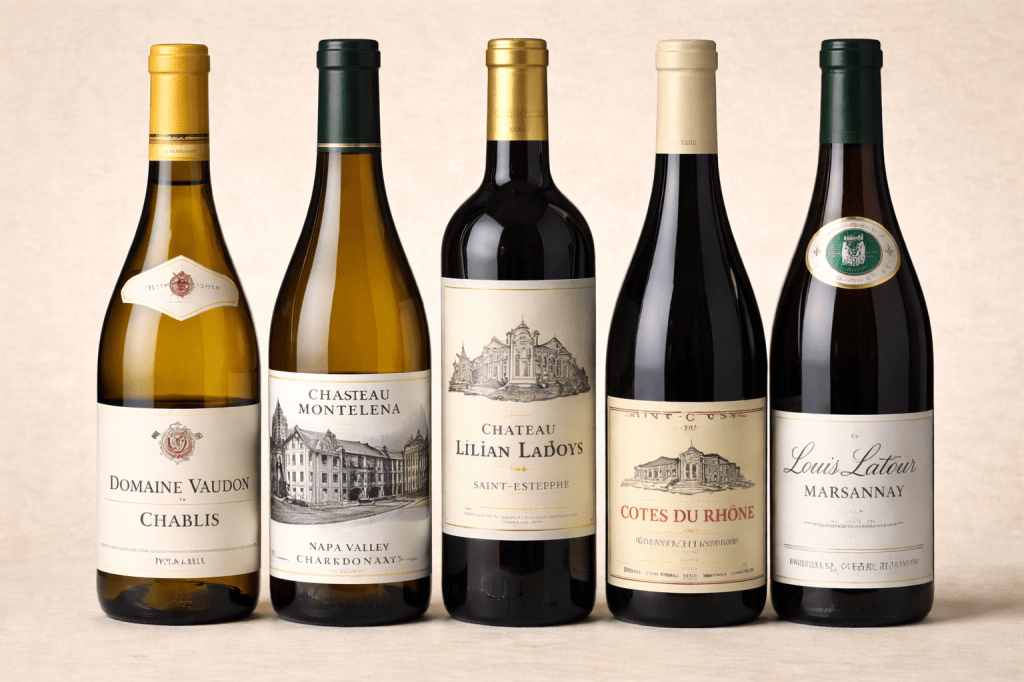
- Chardonnay — Joseph Drouhin Domaine Vaudon Chablis
- Chardonnay (USA) — Chateau Montelena Napa Valley Chardonnay
- Bordeaux (Cabernet Blend) — Château Lilian Ladouys, Saint-Estèphe
- Syrah — Saint-Cosme Côtes du Rhône
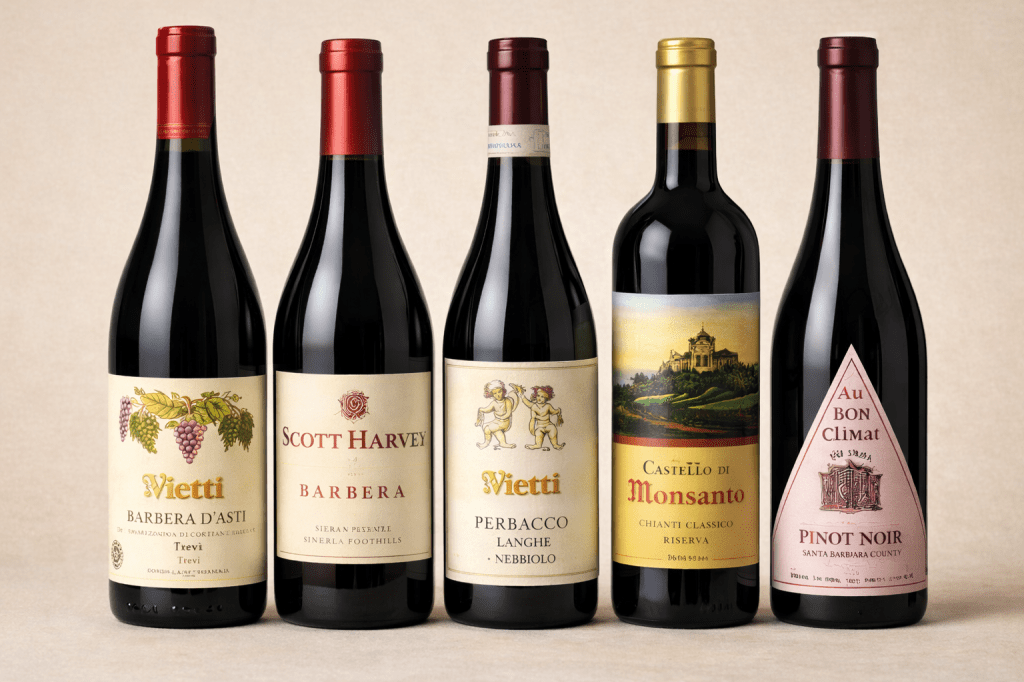
- Barbera — Vietti Barbera d’Asti Trevì
- Barbera (USA) — Scott Harvey Barbera, Sierra Foothills
- Nebbiolo — Vietti Perbacco Langhe Nebbiolo
- Sangiovese — Castello di Monsanto Chianti Classico Riserva
- Riesling — Dr. Loosen “Dr. L” Riesling 2023
- Tempranillo — Marqués de Riscal Rioja Reserva
- Pinot Noir — Louis Latour Marsannay Rouge
- Pinot Noir (USA) — Au Bon Climat Santa Barbara County Pinot Noir
Most of these wines aren’t American — not because California lacks quality, but because certain grapes and styles are more faithfully expressed, and more affordably delivered, in their historic homes.
Wine appreciation isn’t about abandoning where you started. It’s about letting that first spark of curiosity carry you somewhere deeper.
So I’ll ask you:
What was your gateway wine?
What Is a Gateway Wine?
A gateway wine is the bottle or style that first made wine feel pleasurable rather than puzzling. It isn’t necessarily complex, expensive, or prestigious — it’s simply the wine that made you want a second glass.
Gateway wines tend to share a few traits:
- Approachable fruit flavors
- Low bitterness or tannin
- Easy drinking without needing food or analysis
For many Americans, that gateway might be White Zinfandel, Moscato d’Asti, sweet Riesling, or a fruit-forward red like Merlot or Zinfandel. These wines create positive emotional memory — and once that association forms, curiosity naturally follows.
Over time, most drinkers move toward drier, more structured, or more site-driven wines, but the gateway wine still matters. It built the bridge between “I don’t really drink wine” and “I enjoy wine.”
In that sense, every serious wine journey begins with something simple — and that’s not a weakness, it’s how palates are made.

 Sudsy's Cellar
I’ll definitely be looking for these on my next trip to Total Wine!
LikeLike
Enjoy and have fun tasting new producers! Thanks for reading and your comments.
LikeLike