The Evolving Landscape of Global Wine: Climate vs. Market

Wine has always evolved. But over the past several decades, the pace—and direction—of stylistic change has accelerated. Across the globe, wines have grown riper, darker, more structured, and often more oak-influenced. Alcohol levels have edged upward. Texture and immediacy increasingly take precedence over restraint.

The question many wine professionals quietly ask is this:
Are these changes driven primarily by climate change—or by market forces shaped by critics, scores, and consumer demand?

The honest answer is not either/or. It is both.


Where Climate Ends and Choice Begins

Climate change is no longer abstract in the vineyard; it is measurable and unavoidable. Earlier budbreak, compressed growing seasons, rising sugar levels, faster phenolic development, and increasing water stress are now common realities across many of the world’s established wine regions.

These shifts naturally influence grape composition and harvest decisions. In many cases, wines are becoming riper not by design, but by necessity.

Yet climate alone does not dictate style.

While environmental conditions define what is possible, they do not determine what is pursued. That distinction belongs to the winemaker—and, increasingly, to the market.

The Market Pull: When Style Becomes Strategy

As global wine markets expanded, a powerful feedback loop emerged between critics, scores, and consumer expectations. Wines that were richer, more expressive, and immediately impactful tended to score well—and sell well. Over time, stylistic preferences hardened into commercial strategy.

Oak regimes shifted. Extraction increased. Alcohol levels crept upward. Even regions historically associated with restraint began producing wines designed to perform on release rather than evolve quietly over time.

These changes were not inherently negative. They were, in many cases, pragmatic responses to a competitive global marketplace. But they also blurred distinctions between regions, encouraging a convergence of style that made wines more recognizable—and sometimes more interchangeable.

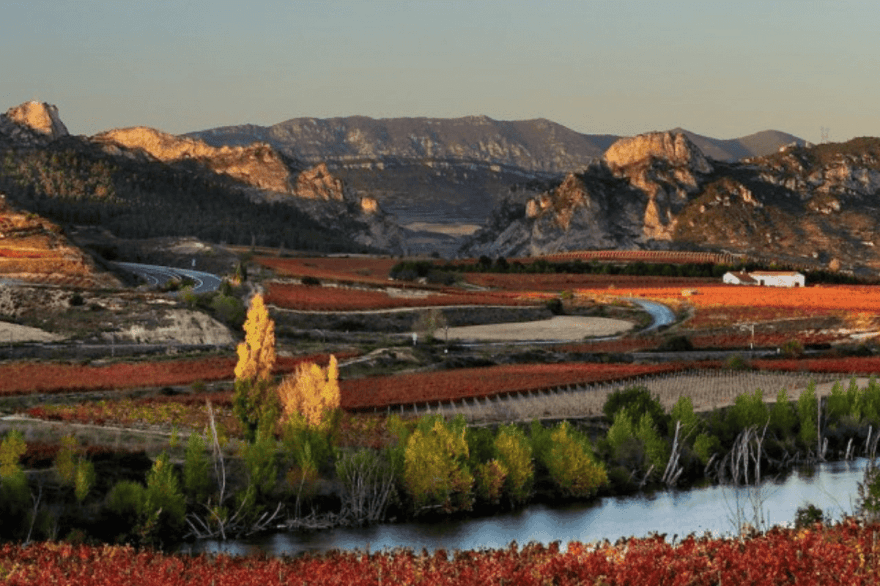
The most consequential moment occurs when climate pressure and market incentives move in the same direction. Warmer growing conditions naturally produce riper fruit; market demand rewards richness and intensity. What appears inevitable can, in fact, be amplified by choice.


Same Region, Two Philosophies: Rioja

Few regions illustrate this intersection of climate, market forces, and human intention more clearly than Rioja DOCa.

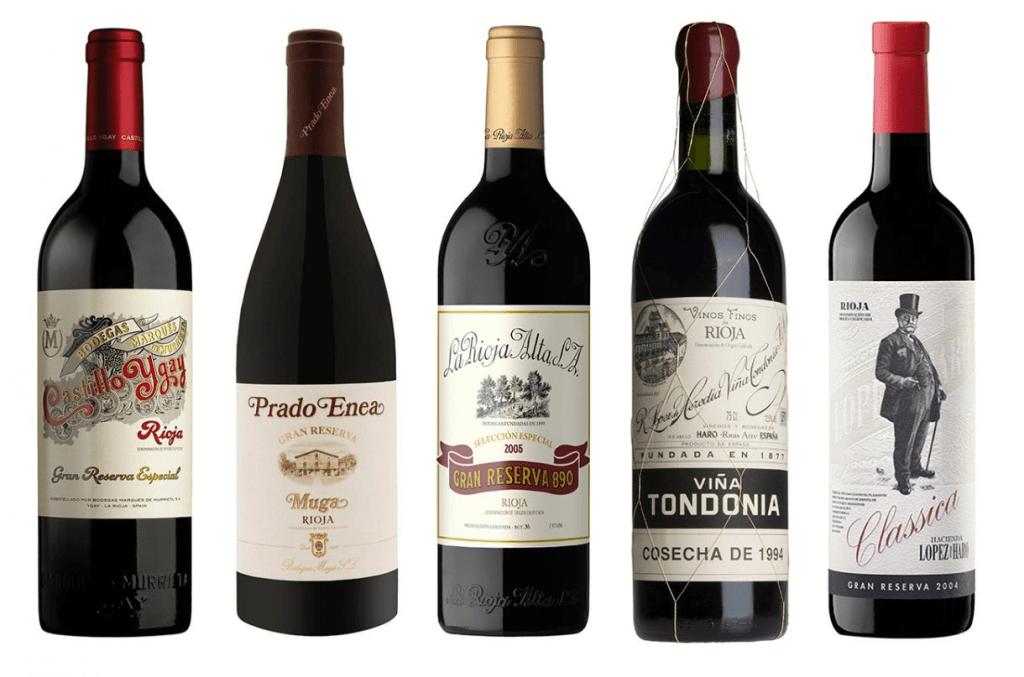
For much of its history, traditional Rioja defined itself not by power, but by patience. Long aging in American oak created an oxidative environment where complexity emerged through time rather than fruit intensity. Extended maturation—often carried out at the winery’s expense—allowed wines to develop tertiary aromas of leather, dried fruit, tobacco, and earth. These wines were typically medium-bodied, softly structured, and released only when considered ready to drink.

Modern Rioja reflects a different set of priorities. While remaining within DOCa aging requirements, many producers shifted toward French oak, shorter maturation cycles, reduced maceration, and increased focus on freshness and structure. Fruit expression became more pronounced; tannins firmer; acidity brighter. Single-varietal bottlings and experimental blends emerged alongside traditional styles.

The result is not a divided region, but a pluralistic one—where philosophy, not regulation, defines expression.

A Quiet Counter-Movement

Alongside these trends, a quieter movement has gained momentum. Some producers, faced with warming conditions, are choosing restraint rather than amplification. Earlier harvests, larger or neutral vessels, gentler extraction, and site-driven decision-making aim to preserve identity rather than polish it away.

These wines may not always dominate tastings or score highest on release. But they reward patience, food, and attention—and they remind us that evolution need not mean homogenization.


Closing: Evolution Is Inevitable. Homogenization Is Not.

Wine will continue to evolve; climate ensures that. But climate does not make stylistic decisions—people do. Vineyard conditions may push grapes toward ripeness, yet it is philosophy, commercial pressure, and producer intent that determine how that ripeness is expressed in the glass.

The most compelling wines today are not defined by whether they are traditional or modern, powerful or restrained. They are defined by clarity of intent. In an era where climate realities and market incentives increasingly align, the risk is not change itself, but convergence—the quiet erosion of distinction in favor of familiarity.

For the drinker, this moment invites curiosity rather than judgment. Asking why a wine tastes the way it does may be more revealing than deciding whether one style is better than another. After all, evolution can deepen identity just as easily as it can blur it—and the difference lies not only in the vineyard, but in the choices made long after the grapes are harvested.

An Exercise in Style: Traditional vs. Modern Rioja

To explore how winemaking philosophy shapes style within a single region, consider tasting wines from producers that represent different approaches within Rioja DOCa. These examples are illustrative rather than prescriptive; they highlight intent, not hierarchy.

Traditional-Leaning Rioja Producers
(Extended aging, American oak influence, late-release philosophy)

  • López de Heredia
    A benchmark for long oxidative aging, American oak, and winery-held releases that prioritize tertiary development and readiness at release.
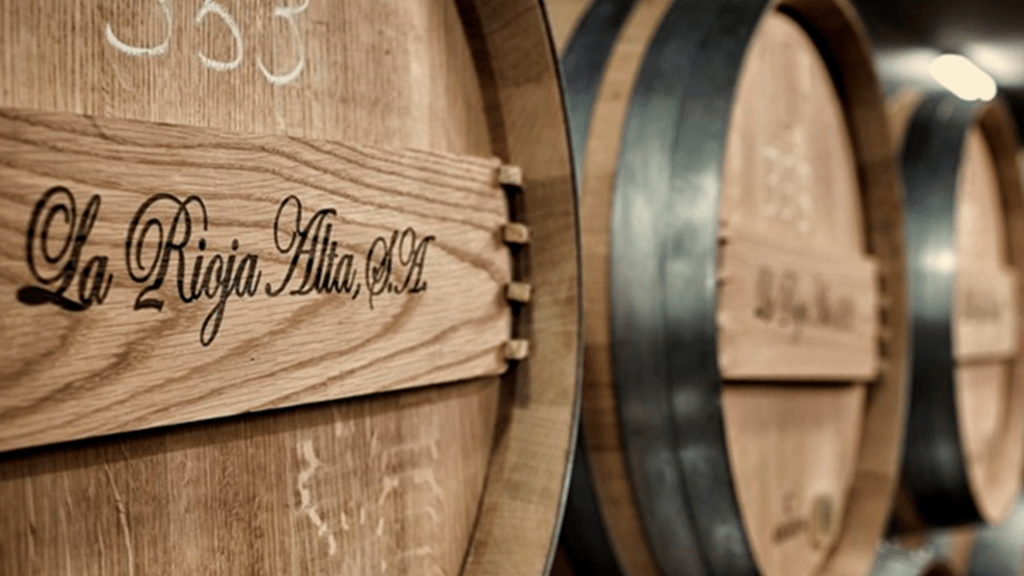
  • La Rioja Alta
    Classical blending, in-house cooperage, and extended maturation defining traditional Rioja structure, aromatics, and longevity.
  • CVNE
    A historic house whose core bottlings continue to reflect restrained fruit expression and traditional aging practices.

Modern-Leaning Rioja Producers
(Freshness, structure, fruit clarity, and precision)

  • Artadi
    Site-focused wines emphasizing purity of fruit, reduced oak influence, and early clarity of expression.
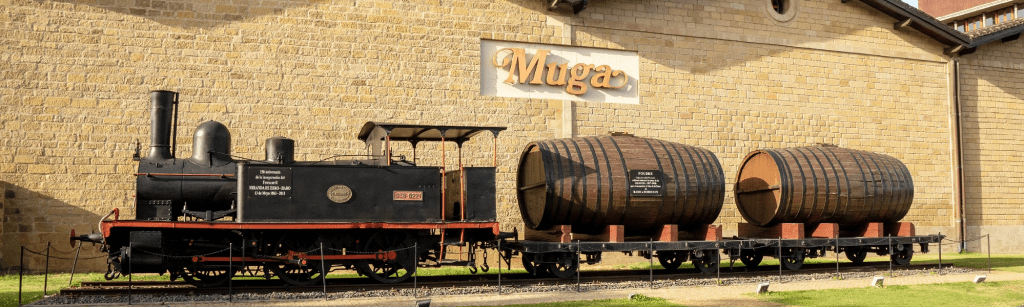
  • Bodegas Muga
    A compelling example of modern Rioja that retains deep respect for tradition—combining contemporary precision, in-house cooperage, and a focus on freshness and structure.
  • Marqués de Riscal
    A historic estate illustrating how traditional roots can coexist with modern techniques and global markets.

How to Use This Exercise

Taste one wine from each category side by side. Focus not on preference, but on why the wines differ:

  • How does oak choice influence aroma, texture, and perception of freshness?
  • What role does time—both in barrel and bottle—play in complexity versus immediacy?
  • How does each wine communicate its intended moment of consumption?

The goal is not to crown a winner, but to understand how climate, market forces, and producer philosophy intersect to shape what ends up in the glass.


I have recently visited the wineries and vineyards of these producers, offering first-hand insight into how philosophy translates from vineyard to cellar.

“These producers illustrate stylistic choices—not quality hierarchies.”
Exploring Spain in Seven Glasses: A Culinary Journey Through Wine & Food

Our recent Spanish wine tasting was a journey across the country’s most celebrated regions, from the Atlantic coast to the rugged slate of Priorat and the sun-drenched hills of Andalucía. Each wine was paired with a thoughtfully chosen dish meant to showcase the best of both glass and plate. What follows is a recap of the wines, their origins, pairings, and my closing reflections on how they performed together.


1. Lagar de Fornelos Lagar de Cervera Albariño 2023

  • Region: Rías Baixas (Galicia, Northwest Spain)
  • Cost: ~$24
  • Pairing: Sardine Taco
  • Why it works: Albariño’s hallmark saline freshness and citrus zip cut through the oiliness of sardines, while the wine’s sea-spray minerality mirrored the briny character of the fish.

Closing Comment: A nice wine, but I would have preferred the lighter frizzante style with this taco. When in Portugal and drinking Alvarinho (the same grape), we were served whole sardines grilled and coated with salt—it was pure heaven. This pairing was okay, but the taco, while beautifully made, included a hot spice that fought against the wine.


2. Bodegas Avancia Old Vines Godello 2023

  • Region: Valdeorras (Galicia)
  • Cost: ~$28
  • Pairing: Lobster, Fennel & Ibérico Cheese Empanada
  • Why it works: Godello’s medium body and subtle creamy texture echoed the richness of lobster and cheese, while fennel’s anise lift found a bright counterpoint in the wine’s citrus and mineral tones.

Closing Comment: The pairing of lobster, fennel, and Ibérico cheese empanada with this Godello really hit the mark—it paired beautifully with the wine. An absolute winner! Godello also seems to be a current sommelier sensation: it has a lovely body, is food-friendly, and offers the ability to age gracefully.


3. Condado de Haza 20 Aldeas 2018 (Tempranillo)

  • Region: Ribera del Duero
  • Cost: ~$35
  • Pairing: Mushroom Bruschetta with Brie, Sage & Truffle Oil
  • Why it works: Ribera del Duero’s dark-fruited Tempranillo and firm tannins matched the earthy depth of mushrooms and truffle, while the creamy brie softened the wine’s structure.

Closing Comment: This Tempranillo comes from the Ribera del Duero region, where higher altitude and warmer daytime temperatures result in thicker-skinned grapes than those typically found in Rioja. The wine showed depth and structure, but the food pairing was only adequate. The enokitake mushrooms—with their delicate flavor and thin texture—didn’t stand up to the wine’s intensity. A firmer, earthier mushroom such as cremini would have provided the substance needed to complement the Tempranillo’s body, structure, and acidity.


4. Familia Torres ‘Perpetual’ 2020

  • Region: Priorat (Catalonia)
  • Cost: ~$100
  • Pairing: Lamb Pop
  • Why it works: Priorat’s concentrated Garnacha- and Cariñena-based blend, with its bold fruit and mineral backbone from llicorella slate soils, stood up beautifully to the richness of lamb.

Closing Comment: This wine from Priorat, where vines struggle to survive in the harsh slate soils, was absolutely outstanding—the darling of the night and the priciest offering, clocking in at over $100. A blend of Carignan and Grenache, it was silky, juicy, and luscious. While lamb chops were a good pairing in theory, the heavy hand with rosemary and other spices was somewhat off-putting. The wine would have sung more purely with just a dash of salt, a crack of pepper, and a gentle rub of fresh garlic.


5. La Rioja Alta Viña Ardanza Reserva 2019

  • Region: Rioja (Haro, Rioja Alta)
  • Cost: ~$48
  • Pairing: Aged Manchego Cheese with Spanish Olives
  • Why it works: Classic Rioja Reserva, with dried cherry, tobacco, and spicy American oak, was lifted by the salty tang of olives and the nutty sharpness of Manchego.

Closing Comment: The wine was intensely aromatic, with lifted floral notes rising from the glass alongside Rioja’s hallmark red fruit and spice. Elegant and classic, it showed why Ardanza has such a loyal following. I will note that we used 12-month aged Manchego, which imparted a fantastic nutty aroma and a drier texture than your typical 3- to 6-month aged cheese. The Manchego and olives made for a pleasant pairing, though the wine’s perfume and layered complexity could easily have carried the spotlight on their own.


6. Bodegas Muga Rioja Rosado 2024

  • Region: Rioja (Haro, Rioja Alta)
  • Cost: ~$18
  • Pairing: Shrimp Ceviche
  • Why it works: Fresh, pale rosado with citrus and berry notes mirrored the brightness of ceviche, while the wine’s crisp acidity balanced the lime-driven marinade.

Closing Comment: The Muga Rosado was bright, delicate, and refreshing, with subtle notes of citrus and red berries that made it a crowd-pleaser. The shrimp ceviche paired well overall, as the freshness of the wine complemented the lime and seafood. That said, the high acidity of the ceviche’s marinade nearly matched the wine one-for-one—bordering on a clash rather than a balance. On its own, the wine showed purity and charm, making it an excellent summer sipper.


7. Pedro Ximénez (PX) Sherry ‘1927 Solera’ by Bodegas Alvear

  • Region: Montilla-Moriles (Andalucía)
  • Cost: ~$35 (375ml)
  • Pairing: Vanilla Ice Cream drizzled with ½ oz. PX Sherry
  • Why it works: Intensely sweet and unctuous, PX sherry bursts with flavors of figs, dates, molasses, and espresso. Poured over vanilla ice cream, it becomes a luxurious dessert—warm, dark caramel richness meeting cool, creamy purity.

Closing Comment: This pairing was pure indulgence. The vanilla ice cream provided the perfect neutral canvas for PX sherry’s deep, luscious flavors of fig, raisin, and caramel. A small half-ounce pour was all that was needed to elevate the dessert into something both elegant and memorable. This was a wonderful reminder that dessert wines, when used thoughtfully, can create show-stopping finales without being overwhelming.


Closing Thoughts

Spain’s wines offer both breadth and depth—from the crisp Atlantic freshness of Albariño to the Mediterranean power of Priorat and the unctuous sweetness of PX sherry. Each of these bottles reflected its place of origin while sparking conversation around the table. Some pairings soared, others taught us what might work better next time, but together they underscored the magic of exploring wine and food as companions. This tasting was not just about the wines themselves, but about discovery, dialogue, and savoring the journey through Spain one glass at a time.


The Evolution of Rioja Wine: Tradition Meets Innovation

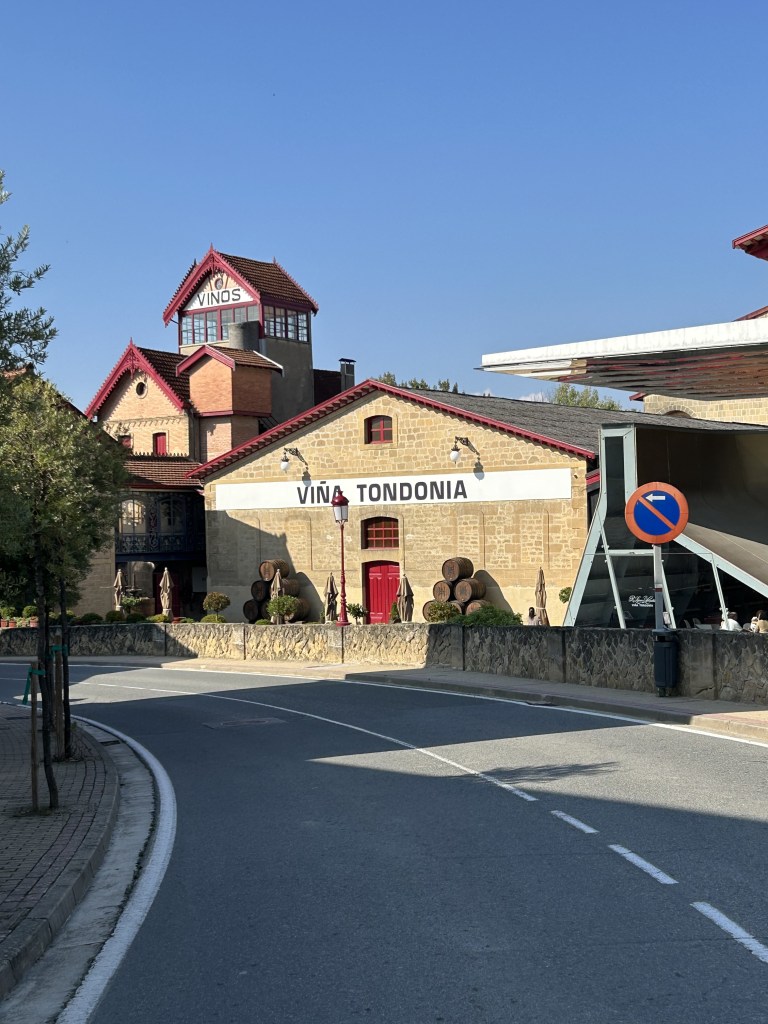
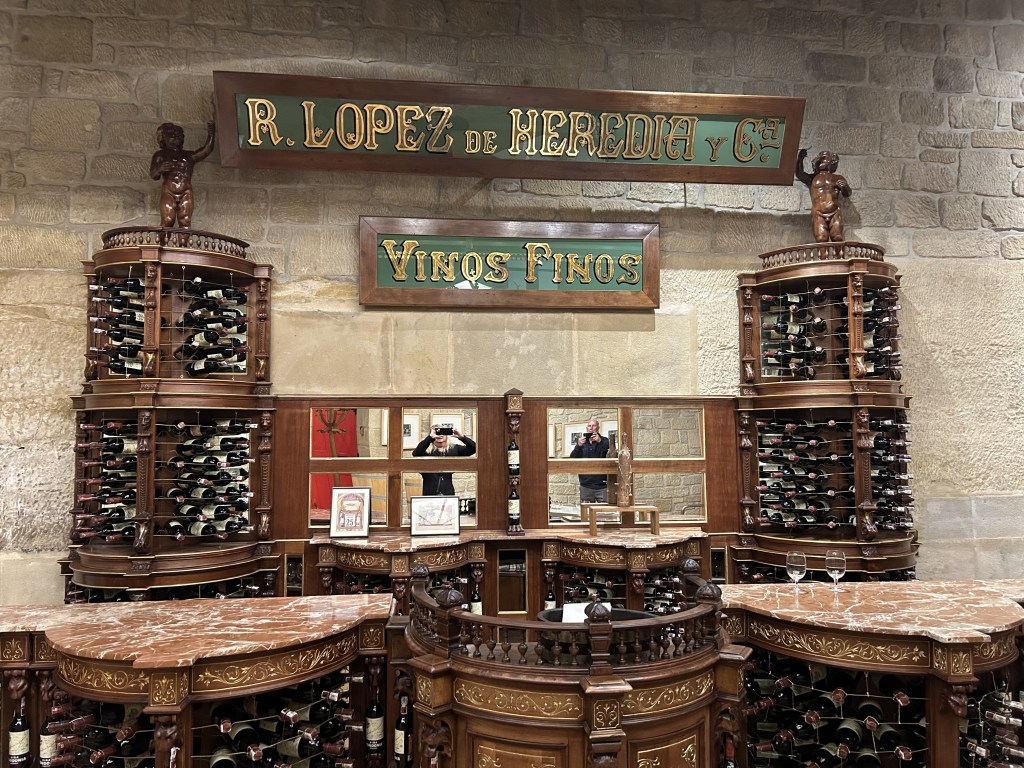
Spain’s wine industry has undergone significant transformation, evolving from a land dominated by blended wines to one increasingly focused on single-vineyard expressions. While traditional Rioja has long been defined by its aging classifications—Crianza, Reserva, and Gran Reserva—some producers are carving a different path. Among them, R. Lopez de Heredia Viña Tondonia stands as a beacon of tradition, offering single-vineyard wines while maintaining the prestigious DOCa designation.

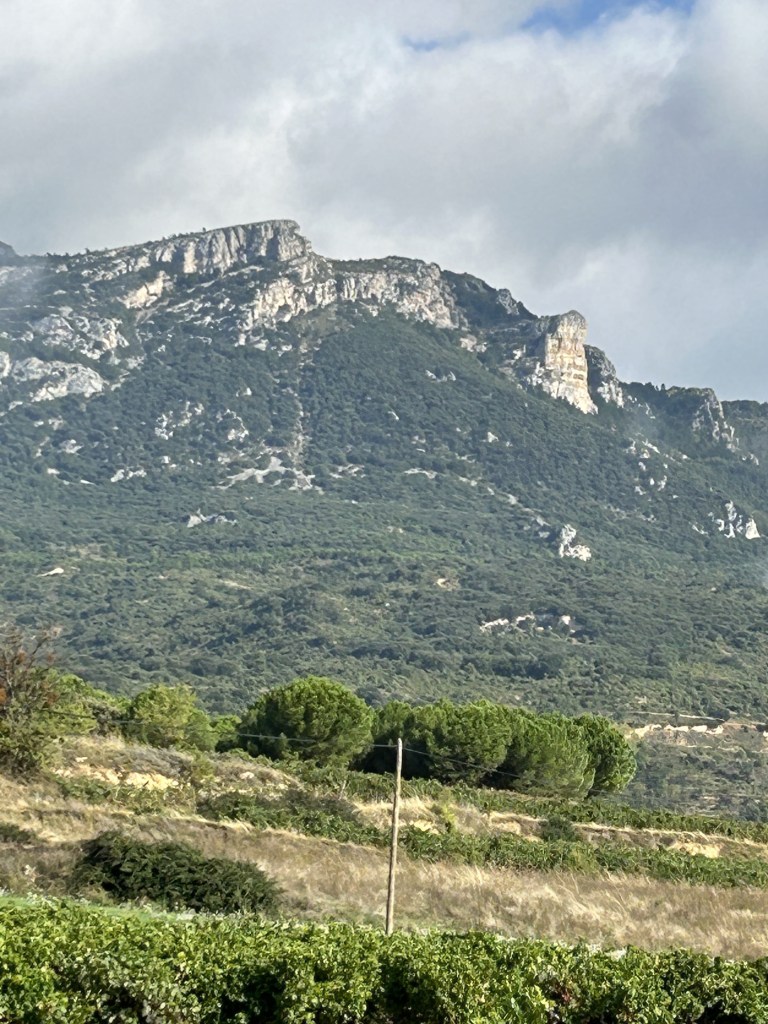
Rioja’s climate is unique within Spain. Unlike much of the country, which is dominated by Mediterranean warmth, Rioja benefits from a continental climate, bringing cooler temperatures and increased rainfall. This allows grapes to develop bright acidity, a hallmark of the region’s wines. The towering Cantabrian Mountains play a crucial role in defining Rioja’s terroir, trapping moisture and preventing hot Mediterranean influences from overwhelming the vineyards.

Rioja is divided into three subregions:

  • Rioja Alta (near Haro) – High altitude, producing wines with great acidity.
  • Rioja Alavesa – Slightly lower in elevation and a bit wetter.
  • Rioja Oriental – Warmer, with more Mediterranean influence, resulting in riper fruit and softer acidity.

Haro, the epicenter of Rioja’s wine culture, is home to some of Spain’s most iconic wineries, including Muga, CVNE, La Rioja Alta, and, of course, R. Lopez de Heredia. These wineries cluster in the historic Barrio de la Estación, where wines were historically shipped by rail to the rest of Spain and beyond. The town’s significance in Rioja winemaking history is unparalleled, housing some of the most renowned producers who have shaped the region’s legacy. A joy to visit!

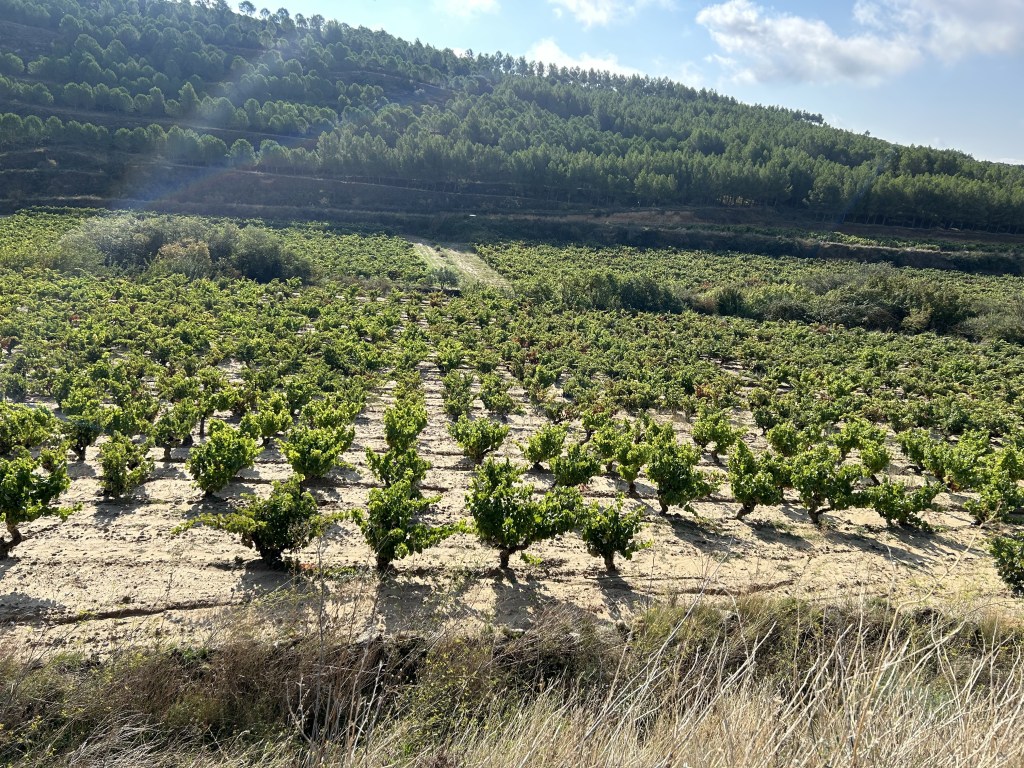
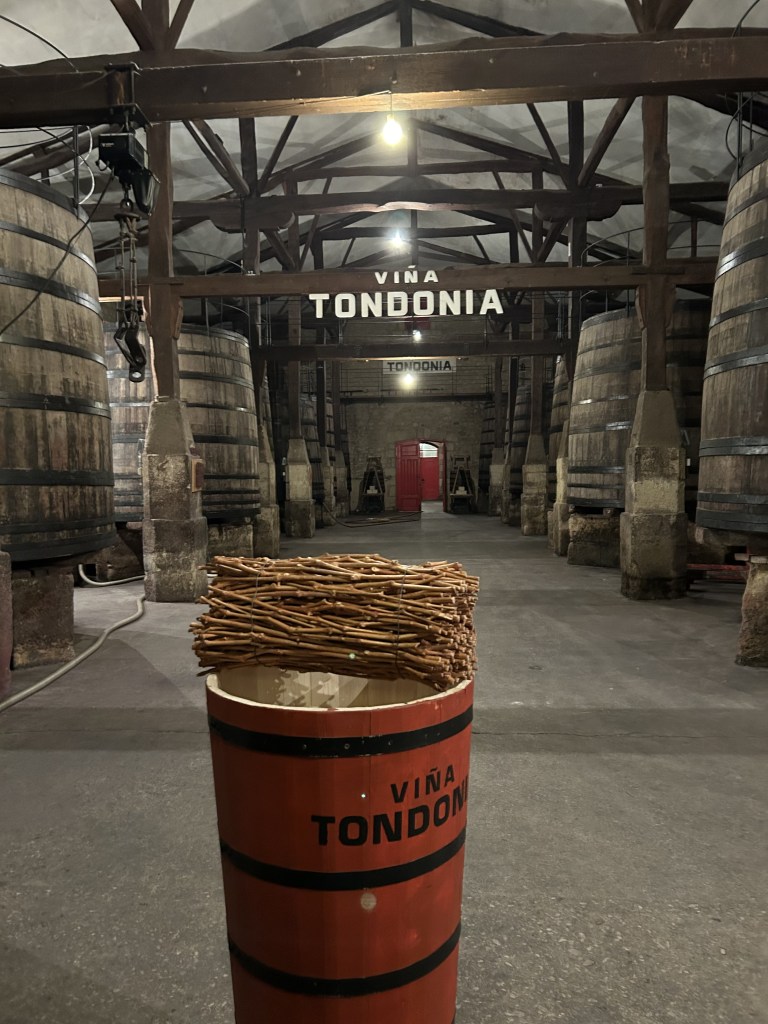
Founded in the late 1800s, R. Lopez de Heredia has steadfastly adhered to time-honored winemaking techniques. Their estate includes the revered Viña Tondonia vineyard, a 100-hectare (250-acre) site uniquely positioned along the Ebro River. The river encircles the vineyard like a moat, providing natural protection and enhancing its microclimate. The name “Tondonia” itself means “round,” reflecting this natural geographical feature.

Unlike many modern Rioja producers who embrace stainless steel fermentation and new French oak, Lopez de Heredia remains committed to traditional methods:

  • Natural Fermentation – Utilizing indigenous yeasts present on the grapes and in the winery.
  • Aging in Old Barrels – In-house cooperage ensures quality control, and extended barrel aging imparts complex oxidative notes.
  • Use of Vine Clippings in Fermentation – Similar to Burgundian whole-cluster fermentation, this practice enhances tannic structure and depth while promoting the presence of natural yeasts in the fermentation process.

While Rioja is best known for its reds, the region also produces remarkable white wines. Lopez de Heredia’s Viña Tondonia Blanco is an extraordinary example, undergoing extended aging to develop rich, nutty, oxidative characteristics akin to Vin Jaune from Jura, traditional Sherry, and aged White Burgundy. Stored in the winery’s special cellar, bottles of each vintage are preserved, showcasing the longevity and evolution of these unique wines.

The winery’s commitment to sustainability is evident throughout their viticulture and winemaking practices:

  • No chemical treatments – They employ cover crops, composting, and manual vineyard work to maintain soil health.
  • Dry farming – Encourages deep root growth, ensuring resilience in drought conditions.
  • Minimal sulfur use – Their wines contain only 50 mg/L of SO2, significantly lower than the EU’s 200 mg/L limit.
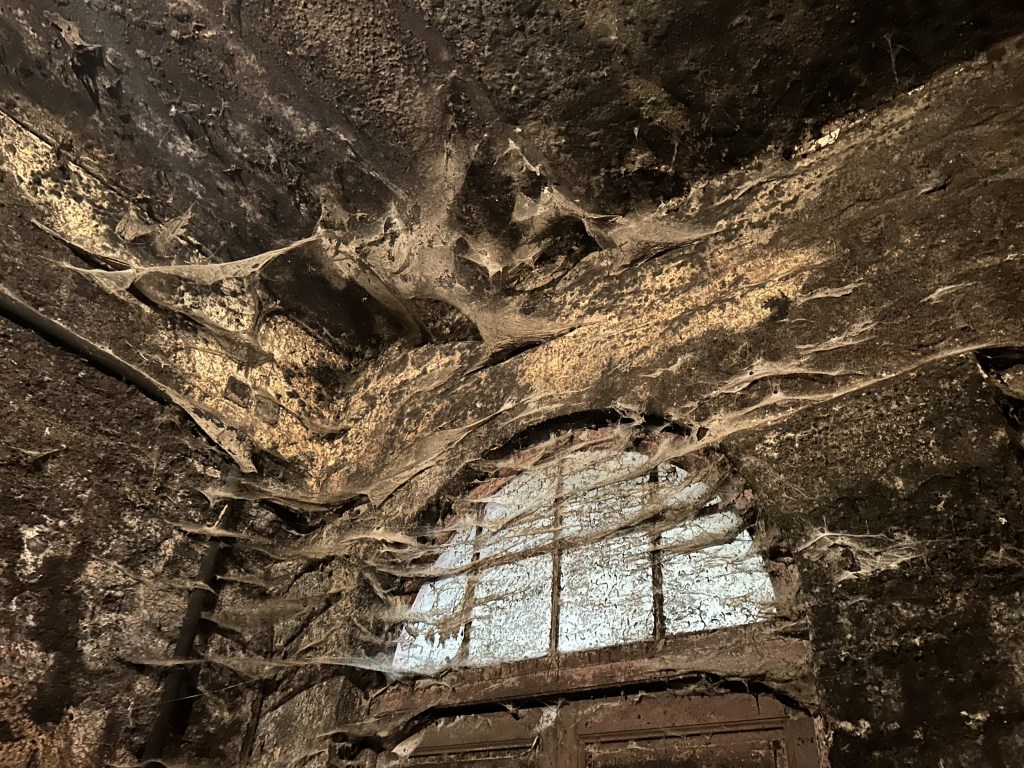
  • Spiders as natural pest control – Instead of using chemical pesticides, they allow spiders to thrive in their cellars, reducing unwanted insects.
  • Aging Cellars with Natural Humidity and Temperature Control – Built in the late 1800s, their facilities are designed to naturally regulate conditions for optimal aging.
  • In-House Cooperage – Maintaining their own barrels ensures quality control and minimizes the need for external resources.
  • Lopez de Heredia does not release a Gran Reserva every vintage; only the finest years merit this designation. Among the most legendary vintages is the 1964 Gran Reserva, often hailed as one of the greatest wines of the 20th century. Tasting a 39-year-old bottle of this vintage was a pivotal moment in my personal wine journey—though at the time, I had no idea of its historical significance!

While Lopez de Heredia champions traditional Rioja, modern producers have embraced technological advancements, creating fresher, fruit-forward wines. Examples include:

  • Crianza Wines – Such as those from CVNE, Viña Real, and Muga, which use shorter aging and newer oak to highlight bright fruit flavors.
  • Use of Stainless Steel – Enhancing freshness and preserving varietal purity.
  • French Oak Aging – Many producers opt for French oak to appeal to international palates.

R. Lopez de Heredia Viña Tondonia exemplifies the power of tradition in an evolving wine landscape. Their commitment to time-honored techniques, single-vineyard expressions, and sustainable practices ensures that each bottle tells a story of Rioja’s rich history. Whether comparing their wines to modern counterparts or simply enjoying their beautifully aged releases, one thing is certain: Lopez de Heredia’s wines stand as a testament to the enduring legacy of Rioja.

Have you had the opportunity to taste R. Lopez de Heredia wine? I was able to visit the winery in September during crush to learn first-hand about this historic producer. The restrained alcohol level and the clarity and silky texture that extended aging creates in the wine is amazing. I encourage you to share your thoughts and experiences in the comments below!

What’s your ‘Wednesday’ wine?

People are always asking me what my favorite wine or grape varietal is.   That is an impossible question to answer when the world offers so many delicious and intriguing wines from incredibly historic places.  I enjoy drinking my way around the globe and, if the wine is sound and of good quality, tastes like the varietal(s) and is a good pairing with the food, I am happy.

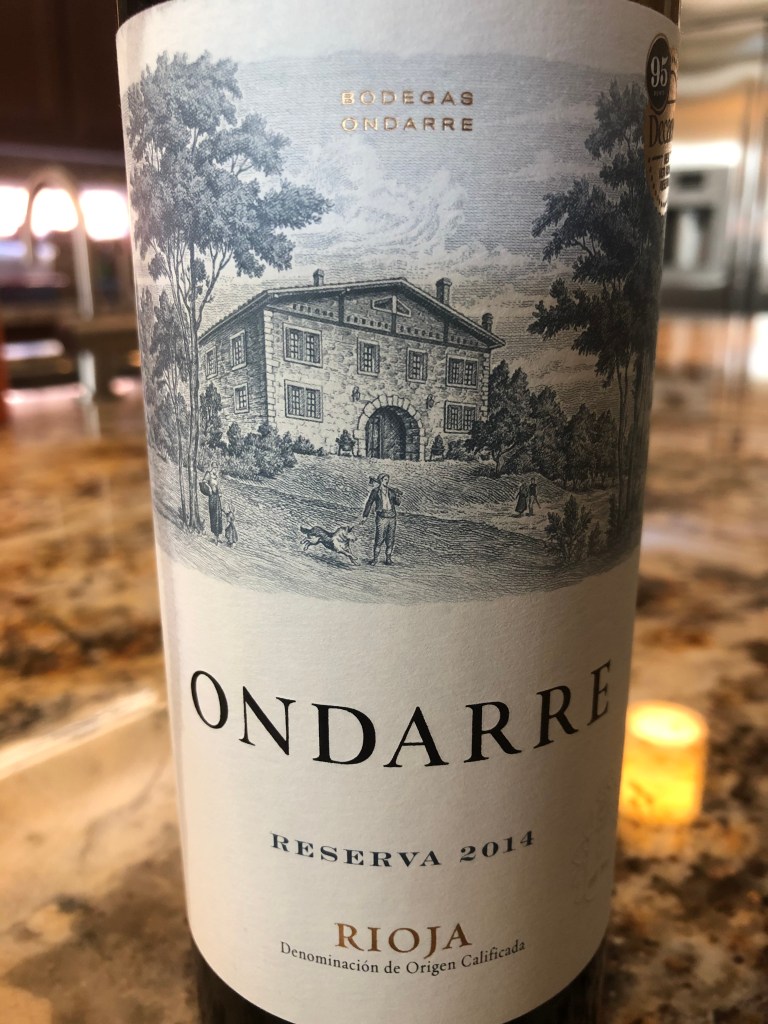
However, I know people are looking for wine recommendations not an esoteric comment that makes me sound smug.  So, the following is a picture of the label of the wine we drank last night.  This is one of my favorite ‘Wednesday wines’, affordably priced (around $15), I have tasted many vintages and while I liked some vintages better than others, I have never been disappointed.

2014 Bodegas Ondarre Reserva Rioja

This wine is from the Rioja region of Spain and is a red blend of 85% Tempranillo (pronounced ‘temp-rah-nee-yo’), 10% Garnacha (Grenache) and 5% Mazuelo (Carignan which is generally grown in France).  It was aged in American and French oak barrels and, as it is a Reserva, it was aged for three years (probably in tanks with one of those years in oak).  On the palate, the wine is dry and fresh with ripe red berries, plum, dusty leather and finishes with a bit of soft vanilla spice.  The wine shows a medium to medium plus tannin structure but presents soft on the palate with just enough bright acidity and a long finish (which is surprising considering the price point).

I love Rioja wines and, while I was lucky to spend a few days in the mountain town of Laguardia in the La Rioja region of Spain, my brother-in-law, Tom Vonderbrink is my real Spanish hero.  Tom spent 40+ days on his first pilgrimage walking the Camino de Santiago – the Way of St. James.  The Bodegas Ondarre is located along ‘the way’ he walked, and the winery website pictures a pilgrim with a hiking pole walking through their vineyards.  I thought this would be a good ‘shout out’ to Tom along with a wish and a prayer that we all can get back to an adventurous life in the very near future. 

Tom, in the spirit of giving, family and friendship, I have shipped a bottle of this 2014 Bodegas Ondarre Riserva to you as a wonderful memory of your accomplishment (along with a bottle of 2016 Cune Rioja, just because).  Please enjoy and drink to all of our health and to all ‘essentials’ in this crazy world.

Santé

Sudsy

Note:  If this ‘Wednesday wine’ article is of interest to you and you would like to see more of the same, please give a ‘thumbs up’ or comment ‘yes please.’