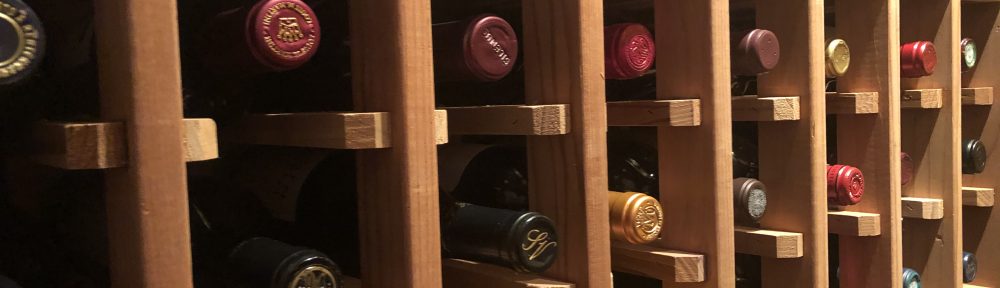
The Lake Tahoe chapter has elevated member education with a series of ambitious masterclasses—2010 Bordeaux by Left Bank appellation; the wines of R. López de Heredia; a cross-vintage Bordeaux comparison (2000, 2010, 2020); a curated flight from Wine Spectator’s 2024 Top 100 with pairings; and, most recently, a focused tasting of the seven Grands Crus of Chablis.
Hosted by Julie and Craig Rauchle at their home overlooking Lake Tahoe, the August program was presented by Claire Torbeck, DipWSET, Certified Sommelier, and Chapter Wine Director. The Grand Cru wines took time to source—several were acquired directly from France—and we were fortunate to present all 2022s across the seven climats (Les Clos, Vaudésir, Valmur, Les Preuses, Bougros, Blanchot, Grenouilles), which together form the single Chablis Grand Cru AOC.
We opened with a two-glass warm-up to frame style vs. site. Volunteers Craig Rauchle and Wally Binder shared observations using a custom tasting sheet designed to separate winemaking style levers (malolactic fermentation, lees stirring, and new oak) from site cues (acid line, salinity, and limestone texture).
- Wine 1: Rombauer Chardonnay (California)—our example of a crafted, consistent style, shaped by full MLF, barrel fermentation/aging, lees stirring, and generous new oak, yielding the familiar buttery, toasty profile across vintages.
- Wine 2: Domaine Pinson, Chablis 1er Cru Fourchaume—a site-driven contrast from a cool climate and Kimmeridgian limestone (marl rich in fossilized seashells), with restrained winemaking and naturally high acidity letting the vineyard speak.
Armed with that “map,” the group tasted through the seven Chablis Grand Cru climats, exploring how aspect, contour, and limestone depth channel fruit profile, line, and length. Set on the right-bank slope above the Serein River, the concentration of Kimmeridgian marl and minimalistic élevage combined to spotlight tension, salinity, and crystalline precision—classic Chablis signatures that distinguish these wines from richer, oak-forward styles.
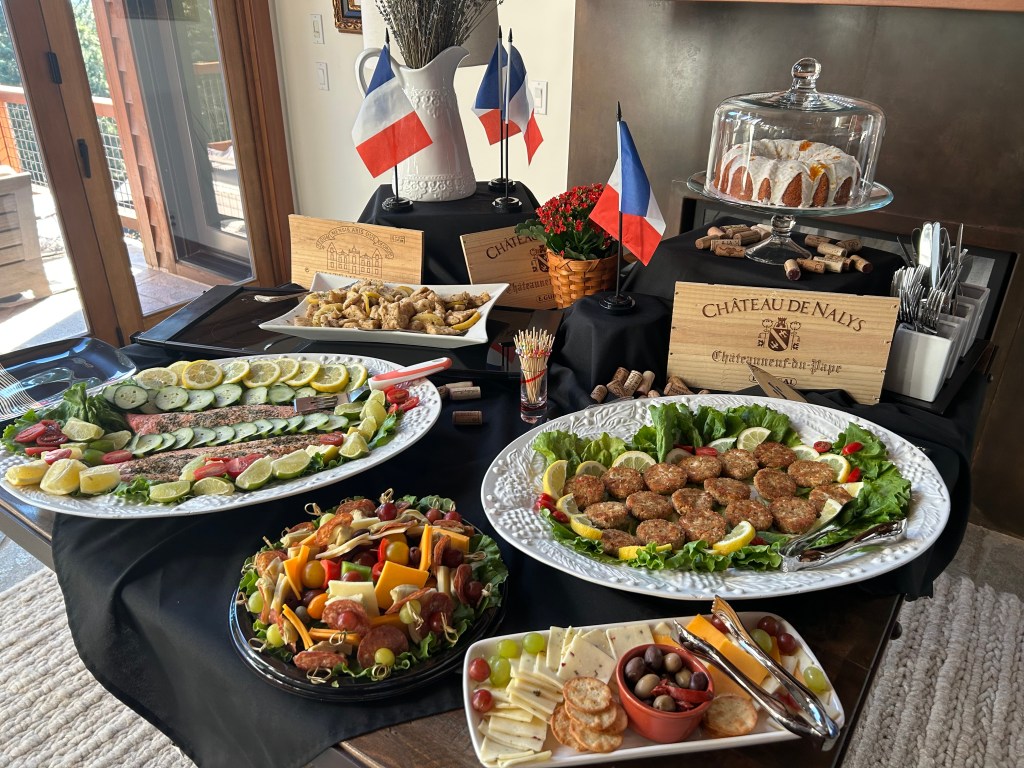
We concluded with a lakeside buffet curated by Julie Rauchle, whose pairings—saline, citrus, and lightly creamy elements—echoed the wines’ structure. A final glass of 2021 Domaine Pinson Chablis 1er Cru Fourchaume offered a graceful bridge from Grand Cru power to Premier Cru finesse—an elegant coda to a rigorous and delicious masterclass.
Learning Outcomes (what members took away)
- Confidently explain style vs. site using clear levers (MLF/lees/oak) and cues (acid/salinity/chalky texture).
- Name the seven Grand Cru climats and understand that they comprise the single Chablis Grand Cru AOC.
- Describe how Kimmeridgian limestone and cool climate shape Chablis: high acidity, mineral line, and length.
- Articulate why Chablis Grands Crus differ from oak-driven styles like classic California Chardonnay.
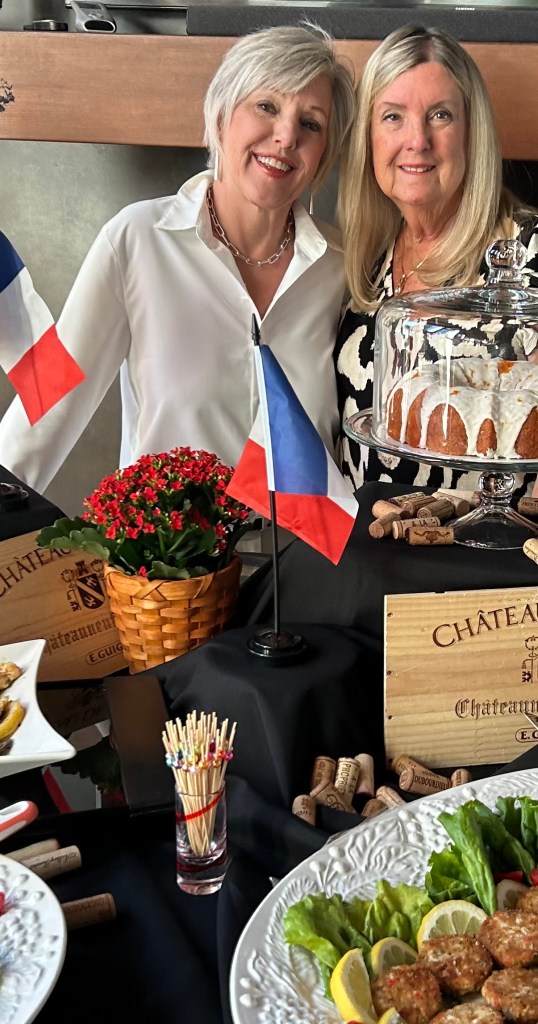
As the chapter’s Wine Director, Claire Torbeck, DipWSET, Certified Sommelier, conceived, curated, and presented all of the masterclasses noted above—including 2010 Left Bank Bordeaux, R. López de Heredia, the 2000/2010/2020 Bordeaux comparison, the 2024 Top 100 tasting with pairings, and the Seven Grands Crus of Chablis. From designing curricula and tasting frameworks to sourcing allocations and leading the sessions, Claire oversees the program end-to-end and will continue to develop rigorous, engaging masterclasses for members of the IWFS Lake Tahoe.
 Sudsy's Cellar