Scale Without Sacrifice: Inside Guigal’s Côtes du Rhône

Wine professionals are routinely asked variations of the same question: what is a reliable, reasonably priced bottle for everyday drinking? In practice, the answer often points to wines that are widely available through grocery stores and large retail channels.

Côtes du Rhône frequently enters that conversation. The appellation offers accessibility and broad availability, but it also spans a wide range of production approaches. Not all producers operate with the same priorities.

Having long found E. Guigal’s Côtes du Rhône to perform above its price point, I began to consider what distinguishes it — and how those differences show up in the glass.


A Visit That Reframed the Wine

In October 2022, I stood in Ampuis tasting across the Guigal portfolio, from Côtes du Rhône through Hermitage and Côte-Rôtie.

Like many wine drinkers, I had always associated Guigal with its prestigious Côte-Rôtie bottlings — including the famed La La wines — as well as the structured expressions of the Northern Rhône.

What surprised me most that day was not the top wines.

It was the Côtes du Rhône.

The bottle most consumers encounter on grocery store shelves — often priced under twenty dollars — carried a level of structure and composure that felt distinctly connected to the house’s upper-tier wines. It did not taste like a volume-driven afterthought. It felt deliberate.
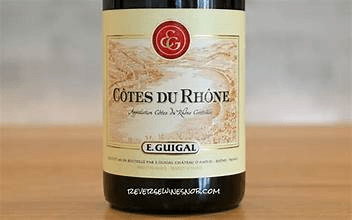

The Reality of Scale

Côtes du Rhône is one of France’s largest appellations, and supplying large retail chains requires significant volume. For many producers, the model is straightforward: maximize yields, machine harvest, ferment efficiently, and bottle early to keep inventory moving.

There is nothing inherently wrong with this approach. It produces wines that are approachable, consistent, and ready to drink.

But it is also a model built around efficiency.

Time matters. Extended aging ties up capital. Longer maceration requires labor and attention. Space in a cellar is finite. Every additional month before bottling delays revenue.

Against that backdrop, Guigal makes a different set of choices.


What Guigal Does Differently

Guigal’s Côtes du Rhône is typically led by Syrah, with Grenache and Mourvèdre playing supporting roles. That alone shapes the wine differently. Syrah brings structure, color, and aromatic lift, giving the wine a firmer backbone than many Grenache-heavy blends at this level.

More importantly, the wine is aged for roughly eighteen months, much of it in large, seasoned oak foudres.

These large vessels don’t add obvious oak flavor. Instead, they allow the wine to evolve slowly, integrating tannins and developing texture over time. It’s a quieter influence, but an important one.

At this price point, that level of aging stands out.

It means the wine is not rushed to market. It is given time to come together.
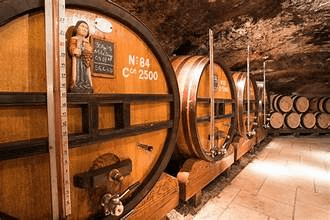

Why It Feels Different in the Glass

When you return to the wine with this in mind, the differences become clearer.

The tannins are present but resolved. The fruit is there, but it doesn’t feel simple or one-dimensional. There’s a subtle savory edge, a sense of structure that carries through the finish.

It doesn’t just taste fruity.

It tastes complete.

That sense of integration is what often separates wines built for quick release from those given time to develop.
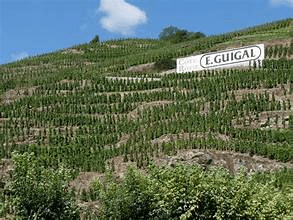

A Foundation, Not an Afterthought

What became clear during the tasting in Ampuis is that Guigal’s Côtes du Rhône is not treated as a separate, commercial product.

It is the foundation of the house style.

As you move up through the portfolio, the wines gain in concentration, complexity, and site expression — but they don’t feel disconnected. The same structural through-lines remain.

That continuity matters.

If the entry-level wine were simple or dilute, it would weaken the perception of everything above it. Instead, it acts as a clear introduction to how the house approaches wine.


Why This Matters on the Shelf

For consumers navigating a crowded grocery aisle, not all bottles are created equally — even within the same appellation.

Some wines are built for speed and accessibility. Others are built with a longer view, shaped by decisions that prioritize structure and integration over efficiency.

Guigal’s Côtes du Rhône shows that scale does not have to mean compromise.

It is widely available. It is reasonably priced. And yet, it reflects a set of choices that give it more shape, more balance, and more presence than many of its peers.


Final Thought

At the end of the day, the difference comes down to intent.

When a producer chooses to give even its most accessible wine time — to let it evolve, to let it settle into itself — that decision shows up in the glass.

Guigal’s Côtes du Rhône is not just an easy recommendation because of price or availability.

It’s a recommendation because it quietly delivers more than expected.
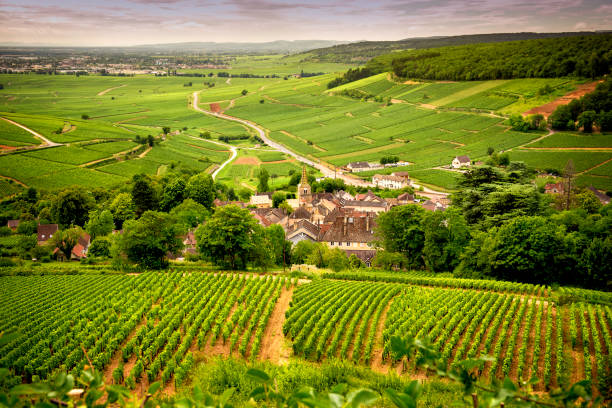
Burgundy’s Quiet Shift: From Extraction to Infusion

Why many Burgundian winemakers are stepping back in the cellar to reveal Pinot Noir’s true character.

Across Burgundy, a subtle change is taking place. Instead of extracting more from Pinot Noir, many winemakers are discovering that patience in the cellar may reveal even more about the vineyard.


A Personal Observation

While preparing several Burgundy masterclasses for 2026, I found myself thinking about how much the conversation around Pinot Noir has changed over the past two decades. When I first began studying Burgundy, much of the technical discussion centered on extraction—how winemakers managed fermentation to build structure and ageability.

Today, however, many producers speak about something quite different: infusion.

The shift may sound subtle, but it reflects a meaningful evolution in how Burgundy’s winemakers approach the cellar.


Extraction vs. Infusion

In wine, meaningful changes rarely announce themselves loudly. More often, they appear gradually—one cellar decision at a time—until suddenly the style of an entire region feels different.

In Burgundy, that shift is happening now.

For decades, discussions about red Burgundy centered on extraction: how much color, tannin, and structure could be drawn from Pinot Noir’s thin skins during fermentation.

Punch-downs, pump-overs, and maceration length were tools used to shape wines that would age gracefully and develop complexity over time.

Historically, extraction in Burgundy was not simply stylistic but practical. In cooler vintages, winemakers often needed to work the cap more actively to build sufficient color and structure from Pinot Noir’s naturally thin skins.

But today, a different philosophy is quietly taking hold across the Côte d’Or. Increasingly, winemakers speak not about extraction, but about infusion.

Extraction implies force. It suggests actively drawing phenolics—color, tannin, and flavor—from the skins during fermentation.

Infusion, by contrast, is a more patient approach. Instead of aggressively working the cap of skins and stems that rises during fermentation, many producers now favor a gentler method. The goal is to allow the wine to gradually absorb structure and aromatics rather than pulling them out through mechanical intervention.

The difference may sound subtle, but in the glass it can be profound.

Infusion often yields wines that feel more transparent and aromatic, with tannins that are fine-grained rather than muscular. Instead of emphasizing power, the wines emphasize nuance.


Infusion and the Shape of Tannins

Another way to think about the difference between extraction and infusion is through the shape of tannins.

Extraction tends to emphasize quantity. Techniques such as frequent punch-downs or aggressive cap management draw more phenolic compounds from the skins and seeds, often creating wines with firmer, more assertive tannic structure.

Infusion, by contrast, is less about how much tannin enters the wine and more about how those tannins integrate. When phenolics dissolve gradually during fermentation—rather than being actively forced out—the resulting tannins can feel finer, more supple, and more evenly woven into the wine.

In practical terms, the wine may not contain less tannin. Instead, the tannins feel different: less angular, more layered, and often more transparent to the vineyard character beneath them.

Because infusion slows the extraction process, it also gives the winemaker more time to observe how the wine is evolving during fermentation. Rather than forcing structure early, the cellar team can allow the wine to develop gradually and intervene only when necessary.

For Pinot Noir, a grape variety prized for its ability to express place, this difference can be critical. The goal is not to eliminate structure, but to shape it in a way that supports the wine rather than dominating it.


Infusion isn’t about extracting less from Pinot Noir — it’s about shaping the tannins differently.


Whole Cluster: Not Just a Beaujolais Technique

The use of whole-cluster fermentation—where grape bunches are placed into the fermenter with stems intact—is sometimes mistakenly associated with Beaujolais.

In Beaujolais, whole clusters are frequently used to encourage carbonic or semi-carbonic fermentation, a process that emphasizes bright fruit and the famously playful aromas often associated with Gamay.

While both Burgundy and Beaujolais may ferment whole clusters, the intention is very different.

In Burgundy, whole-cluster fermentation primarily influences structure, aromatic lift, and fermentation dynamics rather than fruitiness alone. The intact clusters create natural channels within the fermenting must, allowing juice to circulate more gently and encouraging a slower, more gradual infusion of phenolics.

The stems themselves can contribute subtle spice, floral lift, and a distinctive structural backbone to Pinot Noir. When stems are fully ripe—as they increasingly are in warmer growing seasons—they can enhance freshness and complexity rather than introducing bitterness.

In this context, whole-cluster fermentation becomes less about fruitiness and more about texture, aromatic lift, and balance.


Why the Change?

Several forces are driving this shift.

Climate change is one of the most significant. Warmer growing seasons mean that Pinot Noir reaches phenolic ripeness more reliably than it once did. When skins and stems are already mature, there is less need to force structure through extraction.

At the same time, the next generation of Burgundian winemakers has begun taking the reins from their parents and grandparents. Many of these younger producers have inherited not only vineyards but also global demand and escalating land prices. Their challenge is not to make bigger wines, but to preserve the elegance that defines Burgundy’s identity.

In that context, restraint becomes a virtue.


A Region Defined by Patience

Burgundy has long been a region defined by nuance rather than force. As a new generation of winemakers takes the reins—while also navigating climate change, rising vineyard costs, and global demand—their response has often been to do less, not more.

The shift from extraction to infusion reflects that philosophy. Instead of shaping Pinot Noir through aggressive cellar work, many producers now allow the wine to reveal itself gradually.

In Burgundy, patience may prove to be the most powerful tool of all.


Author

Claire L. Torbeck, DipWSET, writes Sudsy’s Cellar to explore how climate, vineyard practice, and winemaking philosophy shape the wines we enjoy.

Exploring Chablis Grands Crus: A Masterclass Overview

The Lake Tahoe chapter has elevated member education with a series of ambitious masterclasses—2010 Bordeaux by Left Bank appellation; the wines of R. López de Heredia; a cross-vintage Bordeaux comparison (2000, 2010, 2020); a curated flight from Wine Spectator’s 2024 Top 100 with pairings; and, most recently, a focused tasting of the seven Grands Crus of Chablis.

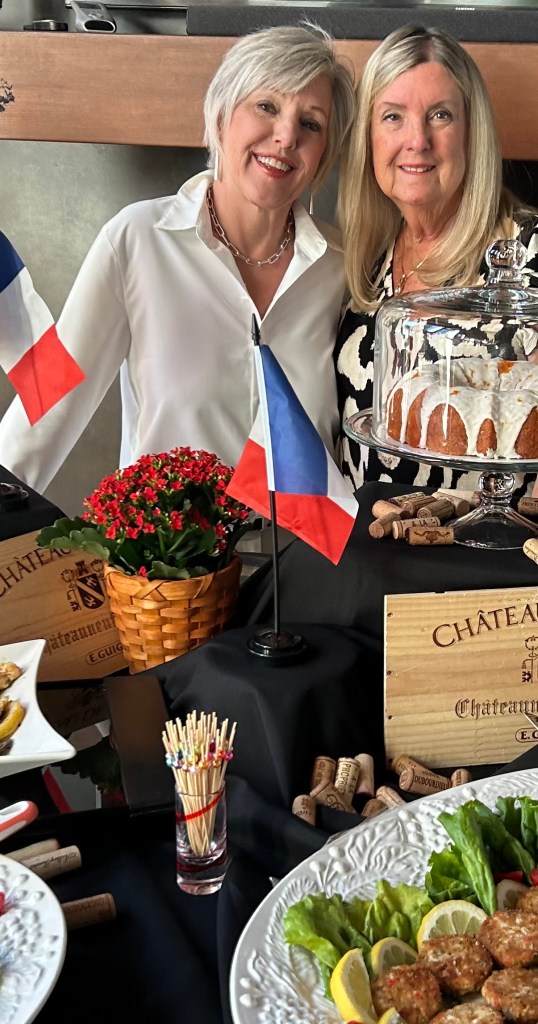
Hosted by Julie and Craig Rauchle at their home overlooking Lake Tahoe, the August program was presented by Claire Torbeck, DipWSET, Certified Sommelier, and Chapter Wine Director. The Grand Cru wines took time to source—several were acquired directly from France—and we were fortunate to present all 2022s across the seven climats (Les Clos, Vaudésir, Valmur, Les Preuses, Bougros, Blanchot, Grenouilles), which together form the single Chablis Grand Cru AOC.

We opened with a two-glass warm-up to frame style vs. site. Volunteers Craig Rauchle and Wally Binder shared observations using a custom tasting sheet designed to separate winemaking style levers (malolactic fermentation, lees stirring, and new oak) from site cues (acid line, salinity, and limestone texture).

  • Wine 1: Rombauer Chardonnay (California)—our example of a crafted, consistent style, shaped by full MLF, barrel fermentation/aging, lees stirring, and generous new oak, yielding the familiar buttery, toasty profile across vintages.
  • Wine 2: Domaine Pinson, Chablis 1er Cru Fourchaume—a site-driven contrast from a cool climate and Kimmeridgian limestone (marl rich in fossilized seashells), with restrained winemaking and naturally high acidity letting the vineyard speak.

Armed with that “map,” the group tasted through the seven Chablis Grand Cru climats, exploring how aspect, contour, and limestone depth channel fruit profile, line, and length. Set on the right-bank slope above the Serein River, the concentration of Kimmeridgian marl and minimalistic élevage combined to spotlight tension, salinity, and crystalline precision—classic Chablis signatures that distinguish these wines from richer, oak-forward styles.

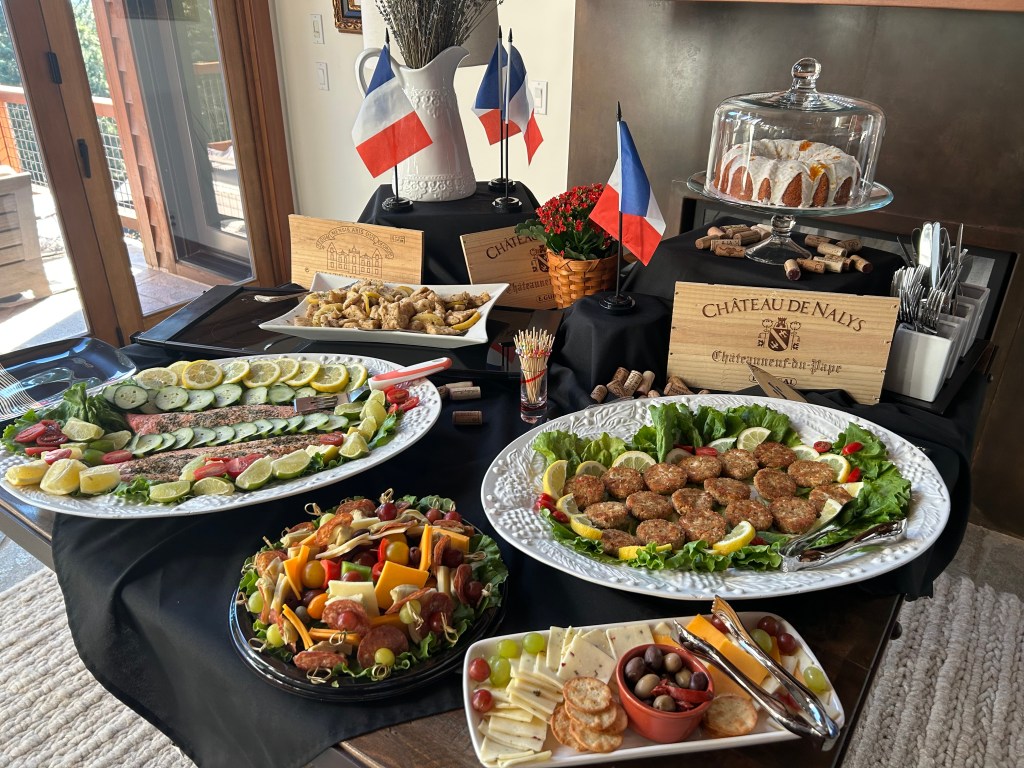
We concluded with a lakeside buffet curated by Julie Rauchle, whose pairings—saline, citrus, and lightly creamy elements—echoed the wines’ structure. A final glass of 2021 Domaine Pinson Chablis 1er Cru Fourchaume offered a graceful bridge from Grand Cru power to Premier Cru finesse—an elegant coda to a rigorous and delicious masterclass.

Learning Outcomes (what members took away)

  • Confidently explain style vs. site using clear levers (MLF/lees/oak) and cues (acid/salinity/chalky texture).
  • Name the seven Grand Cru climats and understand that they comprise the single Chablis Grand Cru AOC.
  • Describe how Kimmeridgian limestone and cool climate shape Chablis: high acidity, mineral line, and length.
  • Articulate why Chablis Grands Crus differ from oak-driven styles like classic California Chardonnay.

As the chapter’s Wine Director, Claire Torbeck, DipWSET, Certified Sommelier, conceived, curated, and presented all of the masterclasses noted above—including 2010 Left Bank Bordeaux, R. López de Heredia, the 2000/2010/2020 Bordeaux comparison, the 2024 Top 100 tasting with pairings, and the Seven Grands Crus of Chablis. From designing curricula and tasting frameworks to sourcing allocations and leading the sessions, Claire oversees the program end-to-end and will continue to develop rigorous, engaging masterclasses for members of the IWFS Lake Tahoe.