Masterclass – 2010 Bordeaux – Left Bank

With a line-up of six highly rated wines from the Left Bank of Bordeaux, we began the evening with an overview of Bordeaux appellations, the three main rivers, as well as the classifications.
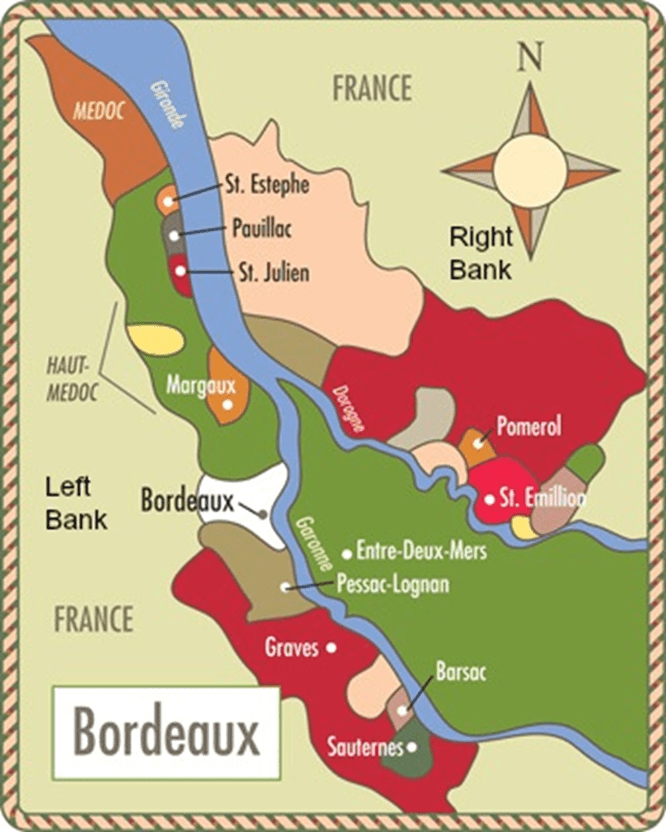
The Bordeaux Region has many moving parts…

• When talking about the Left Bank, we mean the land on the West side of the Gironde Estuary as we follow the flow of this river to the North

• The Medoc is the most Northernly AOC

• The Haut-Medoc includes the Listrac and Moulis AOCs

• From North to South, the AOCs of importance:  St. Estephe, Pauillac, St. Julien, Margaux

• City of Bordeaux interrupts the Left Bank with Pessac-Leognan, Graves, and Sauternes South of the City

• Three rivers:  Gironde Estuary, Garonne (for navigation to the City of Bordeaux) and the Dordogne (St. Emilion) divide the areas

• Entre-Deux Mers = land between the seas – white wine production and inexpensive red wines

• Pomerol – no official classification of Pomerol wine but the region does contain one property widely held to be equivalent to a classified growth:  Chateau Petrus

• St. Emilion is a medieval, walled city on the Right Bank (Dordogne) – Merlot and Cabernet Franc – famous producer is Cheval Blanc

That’s a lot of information, but the map is simply to encourage the understanding of the area.

There are FIVE classifications in the Gironde, listed in order of seniority: 

The 1855 classification – selections all came from the Médoc, with the single exception of Haut-Brion (which also ranked Sauternes and Barsac), ranking them from first to fifth growths – this ranking remains in place today

The Graves classification – 16 Crus, all of which belong to the AOC Pessac-Léognan (1953)

The Saint-Émilion classification – classified in 1955 and updated every 10 years or so (Premier Grand Cru Classe ‘A’ and ‘B’, Grand Cru Classe and Grand Cru)

The Crus Bourgeois du Médoc classification – February 20, 2020, that includes 179 Crus Bourgeois, 56 Crus Bourgeois Supérieurs and 14 Crus Bourgeois Exceptionnels

The Crus Artisans classification – grouping of small, family run estates (that have had lots of changes over time)

While this would seem to be enough info, we then moved on to look at the profile and style of each of the Left Bank appellations for clarity:

Saint-Estephe

Profile: Dark fruits like blackberry and plum, with earthy, savory notes, and sometimes a hint of pepper. These wines are often more austere in youth with a pronounced mineral character.

Style: Full-bodied and robust with firm tannins and a notable structure. Saint-Estèphe wines often require time to soften and develop, revealing complexity and depth as they age.

Tasting: 2010 Chateau Montrose, a 2nd growth from the 1855 Classification which was awarded 100 points by Vinous, 99 by The Wine Advocate, and 98 by Decanter. A blend of 53% Cabernet Sauvignon, 37% Merlot, 9% Cabernet Franc, and 1% Petit Verdot. The wine was quite purple in the glass with aromas and flavors of pepper, licorice, black fruits, and a heady perfume aroma that lingered. With still grippy tannins and juicy acidity, the wine was balanced with a very long finish, complex, with all aspects not quite integrated indicating it is still in its youth and will continue to develop. Purchased in October 2023 for $299.

Pauillac

Profile: Black currant, cedar, graphite, tobacco, and sometimes hints of lead pencil and earth. Pauillac wines often display intense, concentrated fruit with powerful tannins.

Style: Known for its full-bodied, structured, and age-worthy  elegance and complexity with a long finish. Some of the most famous and prestigious wines come from Pauillac, such as Château Lafite Rothschild, Château Latour, and Château Mouton Rothschild.

Tasting: 2010 Chateau Lynch Bages, a 5th growth from the 1855 Classification which was awarded 98 points by Jeb Dunnick and James Suckling, 97 points by Robert Parker, and 96 points by the Wine Advocate. A blend of 79% Cabernet Sauvignon, 18% Merlot, 2% Cabernet Franc, 1% Petit Verdot. The wine was purple in the glass showing aromas and flavors of tobacco, red and black fruits, graphite, baking spice, cinnamon, and anise with a mouth-filling explosion of flavors across the palate. The tannins were fine grained with high acidity supporting the very long and expressive finish. The wine was well balanced, approachable now, but elements will continue to integrate over time. A complex and outstanding wine. Purchased in October 2023 for $229.

Saint-Julien

Profile: A harmonious blend of blackcurrant, black cherry, tobacco, and earthy notes with a touch of spice. Saint-Julien wines are known for their balance and finesse.

Style: Medium to full-bodied with a velvety texture and fine tannins. Saint-Julien is often described as having the power of Pauillac and the finesse of Margaux, making it a middle ground between the two in style.

Tasting: 2010 Chateau Leoville Barton, a 2nd growth from the 1855 Classification which was awarded 100 points by Wine Enthusiast, 97 points from James Suckling, and 96 points from The Wine Advocate. A blend of 77% Cabernet Sauvignon, 21% Merlot, 2% Cabernet Franc. The wine was more ruby/purple with earthy elements of wet mulch, jam (red and black fruits), wet tobacco, licorice and white pepper. The acid was medium plus with fine tannins and restrained alcohol. The wine was balanced with a medium plus finish, complex but not yet fully integrated aromas and flavors with a bit of bitter phenolics on the finish. Purchased in October 2023 for $195.

Margaux

Profile: Floral notes of violet and rose, alongside red and black fruits like cherry and cassis. Margaux wines can also show hints of vanilla, cedar, and spice from oak aging.

Style: The most elegant and perfumed of the Médoc wines, Margaux wines are often described as silky and refined with a lighter body and softer tannins compared to other Left Bank wines. They are known for their aromatic complexity and charm.

Tasting: 2010 Pavillon Rouge, the 2nd bottling of Chateau Margaux, which was awarded 96 points by James Suckling, 94 points by Robert Parker, and 94 points by Wine Enthusiast. The blend is 66% Cabernet Sauvignon, 30% Merlot, and 4% Petit Verdot. The wine was dark ruby in color with perfume of roses and violets, very intense as you brought air across your palate. Red plum and bright cherry, ripe fruits, cedar with silky tannins and juicy acidity. The wine was balanced with good integration and complexity of flavors, with a long finish that will keep evolving. An impressive wine. Purchased in October 2023 for $269.

Haut-Medoc

Profile: Varies by producer, but typically includes red and black fruits, herbs, and a touch of earth and oak. Haut-Médoc wines can show good balance and structure.

Style: Medium-bodied with a mix of fruit and earthiness, these wines are often well-structured with moderate tannins. Haut-Médoc encompasses several smaller appellations, and while they may not reach the heights of the more prestigious communes, they offer excellent value and aging potential.

Tasting: 2010 Chateau Cantemerle, a 5th growth from the 1855 Classification. Awarded 94 points by James Suckling. The wine is a blend of 60% Cabernet Sauvignon, 30% Merlot, 6% Cabernet Franc, and 4% Petit Verdot. Purple color in the glass and opague. The aromas and flavors were more subdued as compared to others in the line-up, with notes of red and black berries and plums, a hint of phenolics from the oak used and a note of older wood. The acidity was medium plus and the tannins a tad on the coarse side. With a medium plus finish, the wine was balanced with restrained alcohol at 13%. The wine was sound, but perhaps would have been a bit more lively had it been open and consumed a year or two earlier. A solid producer from the Haut Medoc that always presents a very good wine, albeit not meant to age like a Chateau Montrose, etc., but priced at $65 when purchased in October 2023, and definitely the bargain in the line-up.

Pessac-Leognan

Profile: Red and black fruits, often with a smoky, earthy character, along with cedar, tobacco, and sometimes a note of graphite. The gravelly soils contribute to a distinctive mineral quality.

Style: Medium to full-bodied with a firm structure and refined tannins. Pessac-Léognan is known for producing wines with great complexity and depth, often showing a balance of fruit, earth, and minerality. Château Haut-Brion is a standout from this region.

Tasting: 2010 Chateau Haut Bailly, a Cru Classe from the Graves Classification. The wine was awarded 100 points from Decanter and 98 points from the Wine Advocate. The blend is 62% Cabernet Sauvignon, 36% Merlot, and 2% Cabernet Franc. The wine was quite purple in the glass with red and black fruits and notably ripe cherries, rich, with a added layer of ripe peaches, dried mulch, a whiff of smoke and graphite, with evident minerality. The acid was juicy, the wine complex and balanced with tannins presenting on the coarse side. So many interesting elements in this wine making it a real crowd pleaser. This wine should continue to age beautifully. Purchased in October 2023 for $195.

An impressive and informative tasting, allowing the comparison of wines from different appellations within Bordeaux, looking for and identifying the unique characteristics and styles, with the bonus of actually recognizing wines at different stages of maturity, while all coming from the fantastic 2010 vintage. A very good lesson in that vintage does matter.

A very fun and great learning session crafted for a Masterclass tasting of Bordeaux wines for the International Wine & Food Society.
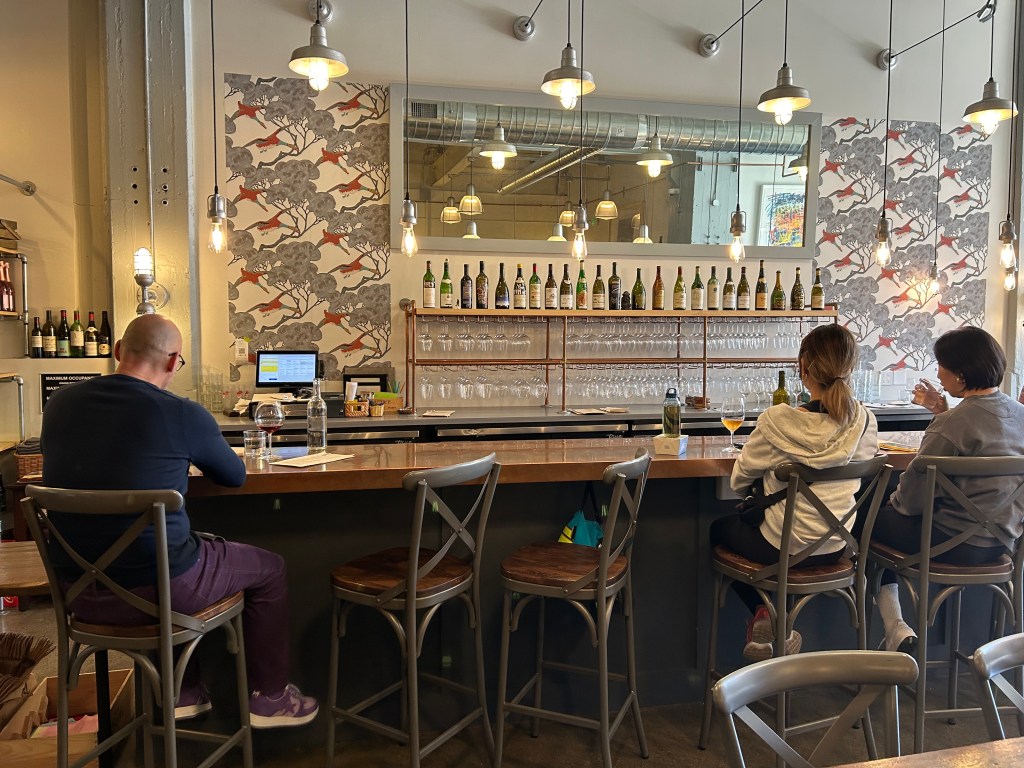
Looking for something more than an afternoon at a California winery with a limited selection of wines?

If you are traveling to California to spend a few days tasting in Napa or Sonoma, or you live close to San Francisco, are you interested in a different venue to taste and to learn more about wine? Imagine, an upscale wine bar in the Dogpatch area of San Francisco. What’s Dogpatch? It was a shipbuilding hub in San Francisco dating back to the 1800s, and retains an industrial vibe with large warehouses, many of which have been updated into residential lofts, art galleries and shops (https://www.sftravel.com/article/18-sommelier-approved-wine-bars-san-francisco).

Welcome to Ungrafted, a retail shop, wine bar, eatery, with a wine club, owned by a husband and wife couple, both who are Master Sommeliers. All staff members are various levels of Sommeliers so you get ‘on the fly’ details about the regions the wines hail from and not just marketing lingo about what you are supposed to be tasting in the glass. You can stop by for lunch or dinner or appetizers and a glass of wine. You can attend a Wednesday afternoon wine tasting, participate in blind tastings on Thursdays, join a formal class on Saturday, or bring your work buddies in for a private class.

I visited for the first time last week and was pleasantly surprised at the beverage offerings (wine, beer, sake, etc.) and a limited but yummy lunch menu. It’s a welcoming place and a gem for any wine nerds out there. Seriously, where can you go to learn and enjoy delicious wines from around the world with such a talented and well-trained staff?

Full disclosure, I’m NOT throwing Napa or Sonoma under the bus! I just was quite pleased to find a different kind of venue to explore wines around the world. Check out their offerings at: https://www.ungraftedsf.com/

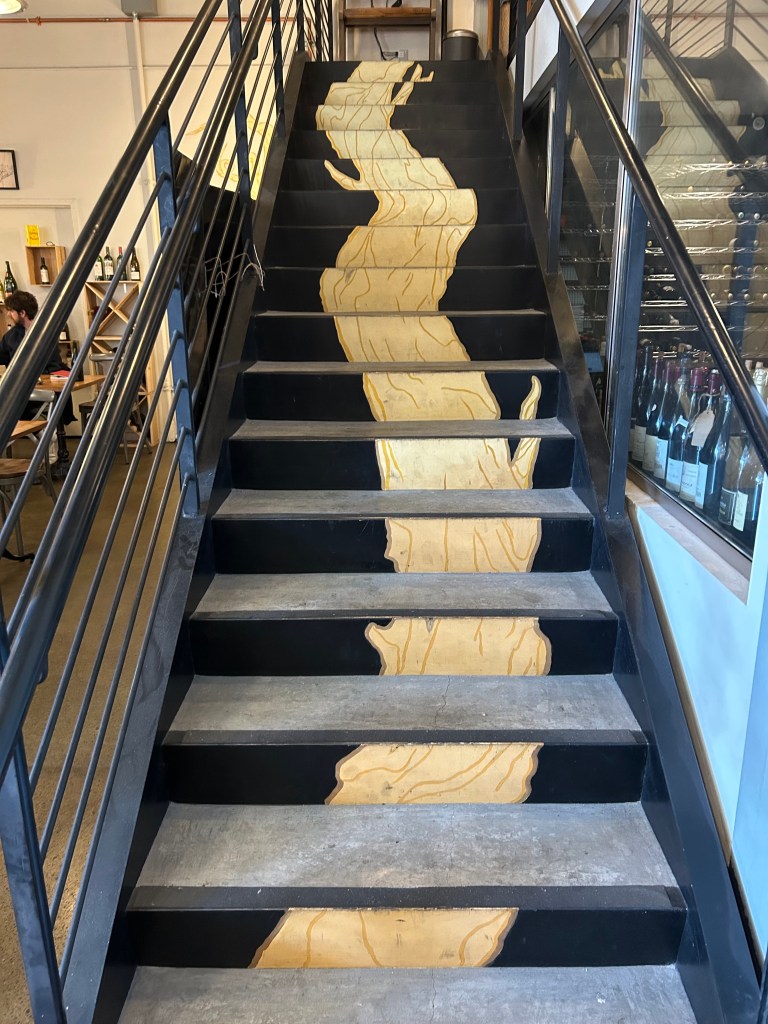
Notice the kiddie table in the picture? It seems they welcome all ages!

Fraternal Wine Organizations have a lot to offer…

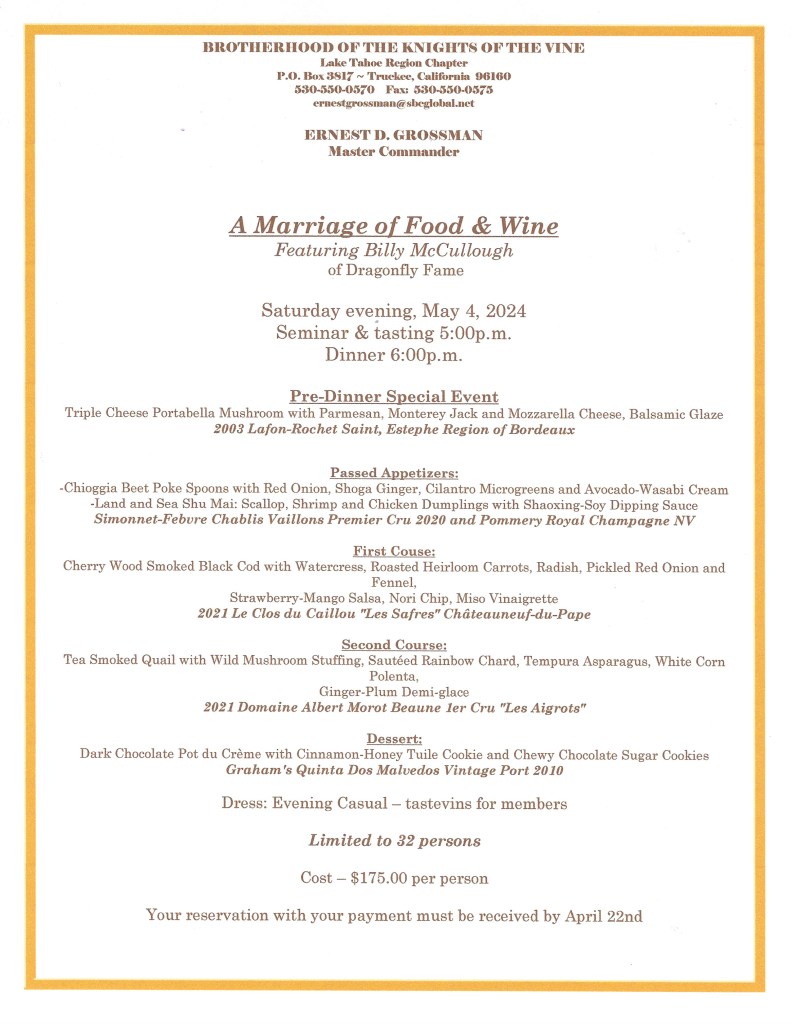
The Knights of the Vine (KOV) Lake Tahoe hosted an innovative food and wine pairing event at the home of Commander Ernest Grossman in Truckee, California, on the snowy evening of May 4, 2024. Billy McCullough, former owner/chef of the Dragonfly Restaurant, crafted the menu, presenting creative cuisine with an Asian flair, and I had the honor of pairing the food with delicious wines for the evening.

Ernie, in his thoughtful and generous manner, gifted a couple of bottles of the 2003 Lafon-Rochet Bordeaux from his personal cellar for a mini-educational event. The 20 year old wine was kept at 60 degrees to help lift the acid and show the brightness of the fruit. Gratefully, we found the corks to be pliable with no evidence of leakage, so we carefully decanted to remove any sediment. Then, the deeply colored wine was poured into glasses to rest for several minutes and to allow any reductive aromas to blow off. It was indeed an old beauty in the glass. Deep ruby/purple core fading to a more garnet hue at the edges, an initial whiff of raisin faded to ripe black plum, blackberries, licorice, acid was medium plus and alcohol was still well integrated in the wine. The finish was surprisingly long. It was a delight and a great educational experience to show patience when opening old beauties!

Moving to the appetizer course, the Pommery Royal Champagne NV was amazing with the poke spoons and dumplings. The Champagne showed lemon chiffon and creme brulee aromas, very fresh lemony fruit, and the lightness of the sparkling wine on the palate was a perfect pairing for these amazing nibbles.

Next came the Cod…

A beautiful, creative presentation of perfectly prepared, almost blackened, cod smoked on cherry wood and presented with grilled vegetables and strawberry salsa. I paired this with a Chateauneuf du Pape drawing toward the smoked cherry wood and strawberry salsa, and of course, with consideration as to where it stood in the line-up of dishes for the evening. The Grenache element in this wine definitely sang to the smoked and fresh strawberry elements, and the Cod itself was meaty so the weight and texture also worked beautifully.

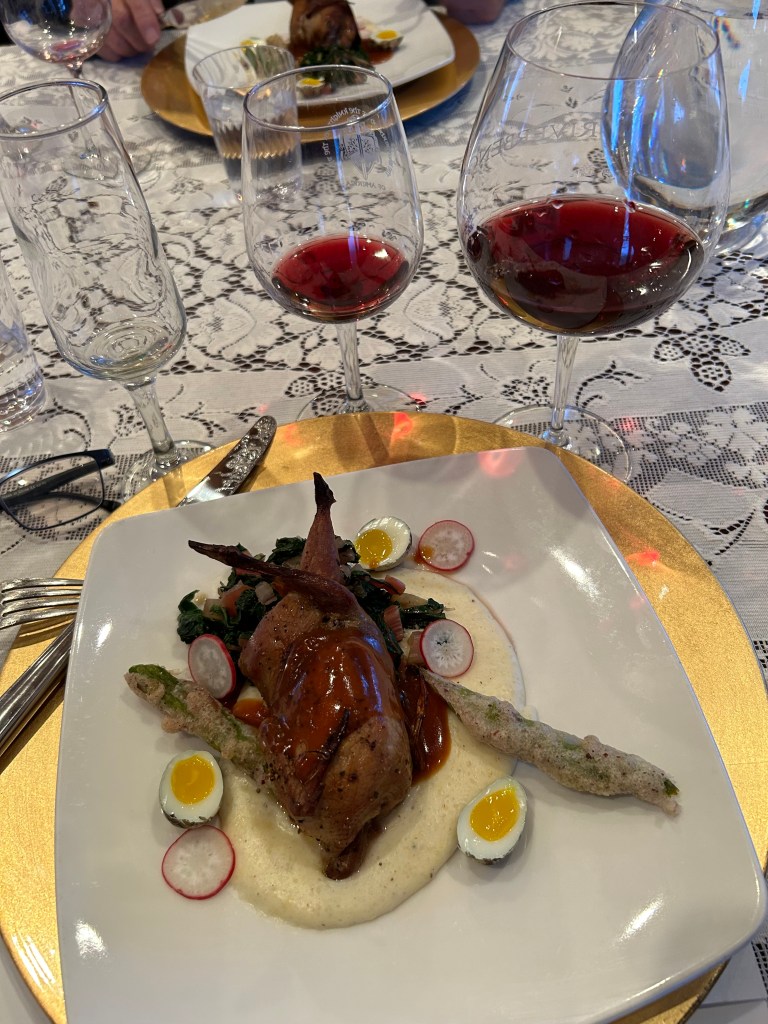
Tea smoke Quail came next, surrounded by Quail eggs, with mushroom stuffing completing the Quail, all on a bed of polenta. The Premier Cru Burgundy from Domaine Albert Morat absolutely sang with this dish, drawing to a pepper element in both the food and wine. This proved to be ‘off the charts’ amazing and I believe it was the favorite pairing of the evening.

To play to an educational moment, we had both the Chateauneuf and the Burgundy poured at the same time so that guests could try each wine with each of these two courses. It was fun to find that everyone liked the pairings presented, but appreciated the opportunity to try it themselves. We also talked about the depth of color of the Chateauneuf vs. the Burgundy, pointing out that often people think the darker the color the more aromatic the wine. However, while the Chateauneuf du Pape was ruby/purple and more intensely colored, that was due to the thick skinned grape varieties like the Syrah which is part of the blend. The Burgundy, on the other hand, while it was ruby/garnet but had less depth of color (typical of thin skinned varietals), was intensely aromatic, as much so as the Chateauneuf.

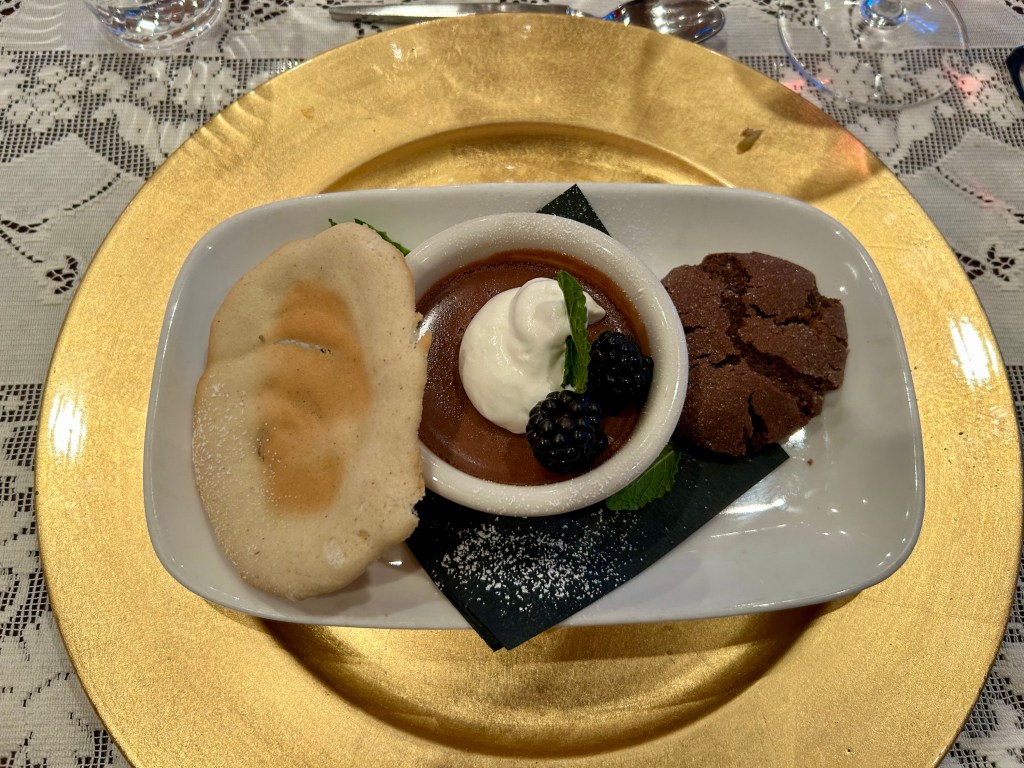
I generally skip dessert, but not tonight. This was an amazing combination of texture and flavors as well as candy for the eyes. All seamlessly paired with the delicious vintage port from Graham’s and most of us went back for more. While quite the hearty dessert, Chef Billy spoiled us all by bringing plates of additional ‘cookies’ to each table for our enjoyment, not to mention second pours of the lovely port wine.

It was a fantastic dinner as well as an educational opportunity, tainted only by a rouge spring snowstorm that kept many of our friends home due to road closures. While we we missed them dearly, this will be a dinner to remember as well as ‘snowageddon’ which came out to play when not invited.

If you love wine and food and want to surround yourselves with like thinking people, I encourage you to check out the Knights of the Vine (KOV) at: http://www.kov.org

There are many chapters around the country and more organizations to check out through the F.I.C.B. organization at: https://winebrotherhoods.org/en/

Amador County Commercial Wine Competition 2024 results…

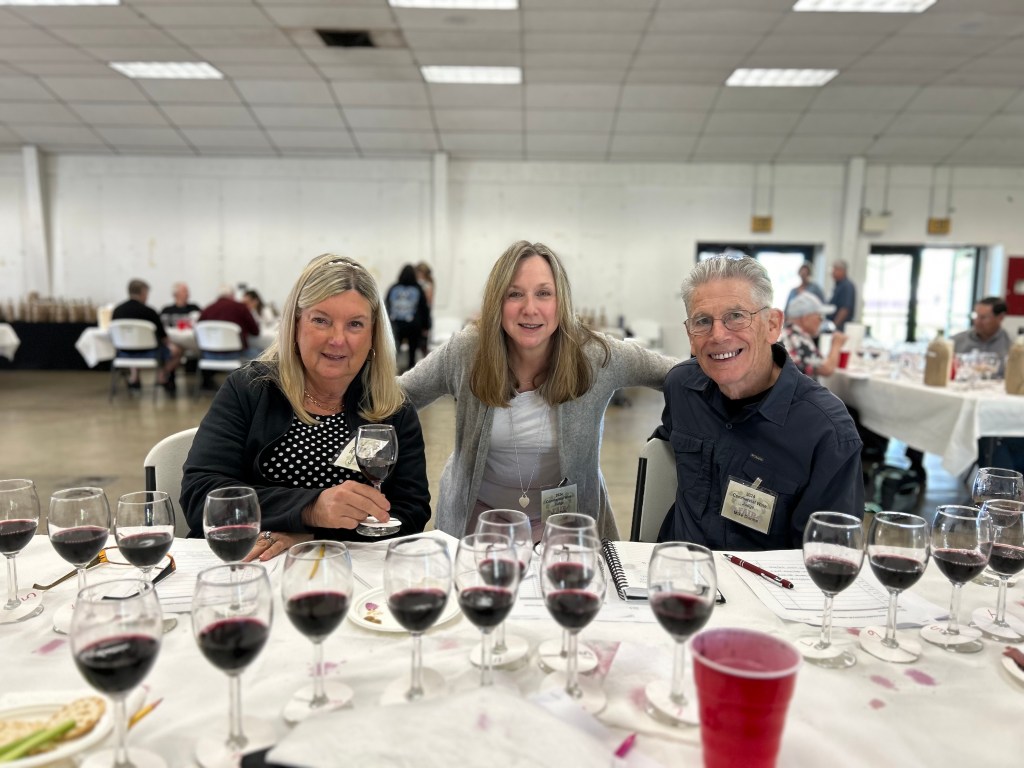
It’s great to judge these AVA type competitions as it gives a good snapshot of the producers and how they stack up against their fellow wineries. The competition is ‘blind’ (meaning the judges have no idea of the winery that produced the wine in the glass). Each wine is identified by a number and scored on the merits of what is tasted in the glass. However, we do know the ‘category’ such as Zinfandel, Cabernet Sauvignon, or Other White Blends, for example.

Our panel consisted of a seasoned winemaker (with a Bachelor’s degree in Enology – the science of winemaking), an acclaimed wine writer and author, and me (I hold the DipWSET certification, am a Certified Sommelier, and an experienced wine judge). We worked together seamlessly and we each came away with some nuggets of wisdom from each other. There is always an ‘A-HA’ moment…

The night before the competition, Casino Mine Ranch Winery hosted the judges for a salad and pizza dinner with an assortment of freshly baked pizzas prepared in their amazing woodburning pizza oven. They were delicious and a wonderful pairing with their line-up of tasty wines. (Note: Casino Mine Ranch also had wines entered in the competition, but they did not offer tastings of any of the entries for this event.) Visit their website at: https://www.casinomineranch.com/visit-us/

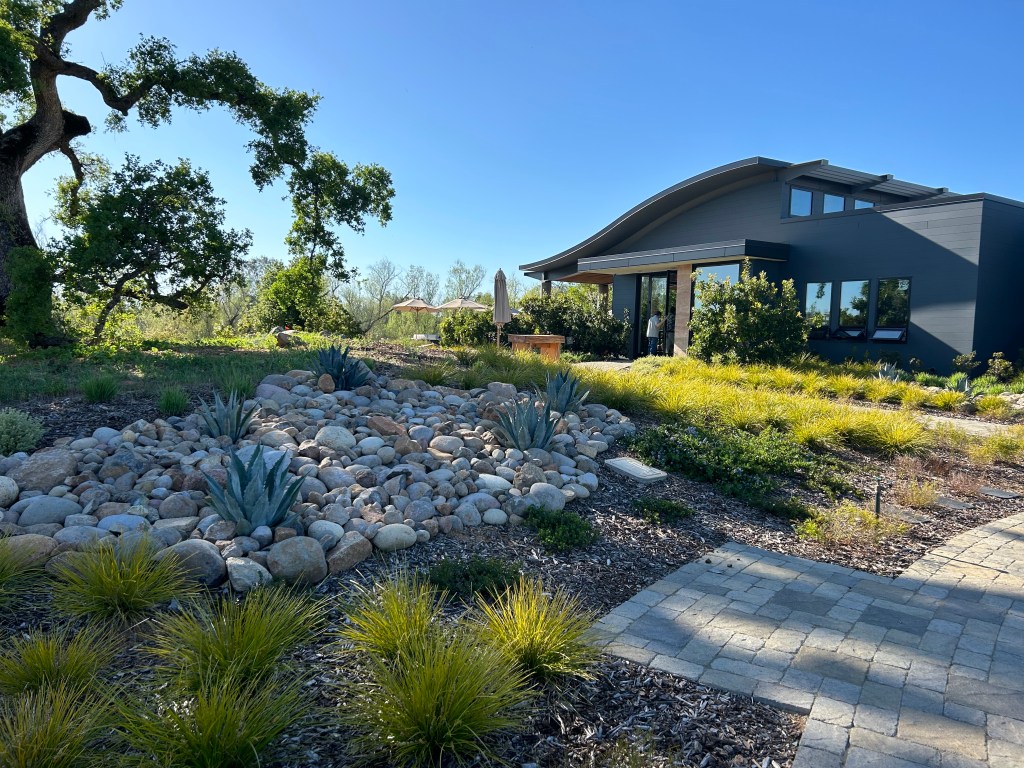
Here is a picture of the beautiful new winery building and the sitting area overlooking the water at Camino Mine Ranch…

The results of the competition have not yet been posted to the Amador County website, but here is a link to an article that tells a bit about some of the winners of this year’s competition: https://www.ediblemontereybay.com/blog/in-praise-of-barbera-amador-wine-competition-winners/

FAIR RESULTS NOW POSTED: https://amadorcountyfair.com/2024-fair-results

I’d like to also give a ‘shout out’ to Rest, a Boutique Hotel, where we stayed the night before the competition. The rooms are lovely and very comfortable, we enjoyed the fire pit with a glass of wine before turning in for the night, and the staff was incredibly attentive to every detail. Breakfast the next morning was wonderful, and I cannot wait to return. Their website can be found here: https://www.hotelrest.net/

After the competition, we dined at Taste, an upscale restaurant a few doors down from Rest. It was a lovely surprise to find such quality in the Foothills, with creative dishes, and a wine list that included Foothill wines but also International selections. Their website can be found here: https://www.restauranttaste.com/

If you are looking for a get-a-way, Amador County has lots to offer, although truly their wines are the star of the show. Get out there and try some of these award winning wines!

Wine judging is serious business…

It was a pleasure to judge at the 2024 El Dorado Commercial Wine Competition this past week. Our panel was comprised of a viticulturalist, a technical winemaker, a wine writer and me, an educator (DipWSET and Certified Sommelier) and the Wine Director (buyer) for several fraternal wine organizations. We worked well together and gave each wine our full attention and careful consideration, detailing the attributes present. We always requested a taste from a second bottle if there was any question about the condition of the wine as we wanted to ensure the wineries were able to put their best foot forward.

This competition is an ‘open’ one, which means that any winery from around the world is able to submit for consideration. Obviously, located in the foothills, the bulk of the entrants are in and around the foothills and general areas of California. The competition is blind which means the wine in the glass is only identified to the judge(s) by a number assigned to the entry. We have no idea of the winemaker or winery while evaluating.

The ‘Special Awards’ given (Best of Show White, Red, etc.) and the full report on all awards can be found by clicking the link below:

https://eldoradocountyfair.org/commercial-wine.html

Support these local wineries by stopping by and letting them know you read about the wonderful awards they earned! As an added bonus, you might find something you can’t do without for your Easter celebration!

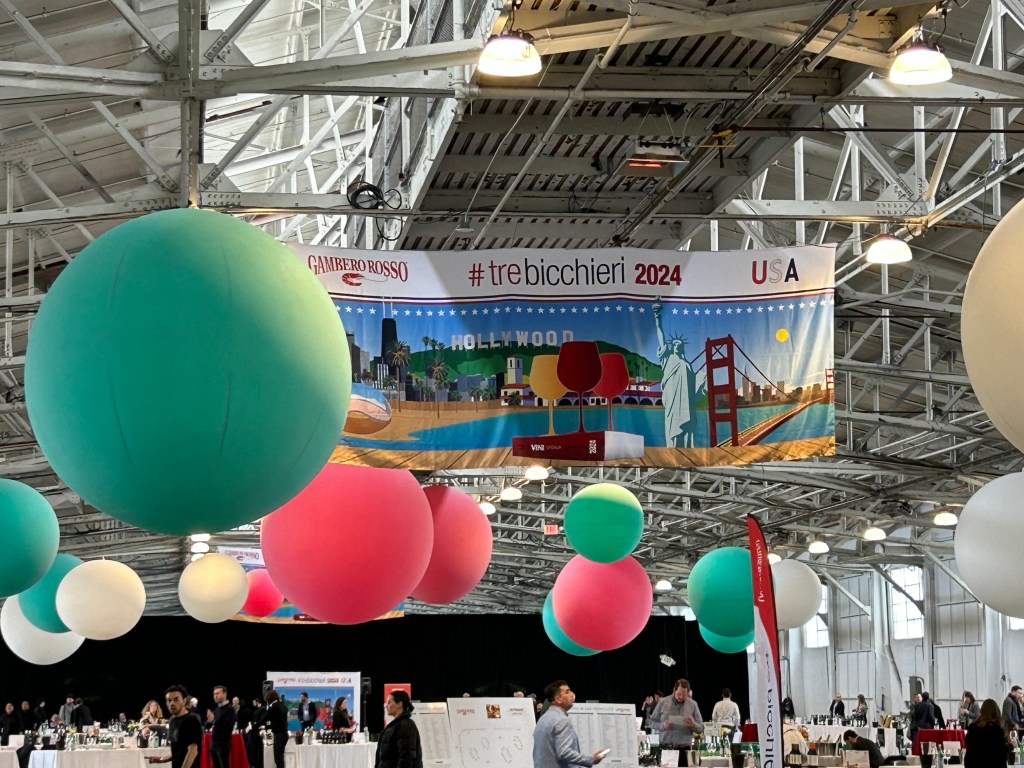
Gambero Rosso’s ‘Tre Biccheri’ in San Francisco 2024

“Tre Bicchieri” translates to “Three Glasses” in English. It is a prestigious wine award given by the Italian wine guide, Gambero Rosso, a leading authority on Italian wine. Their annual Vini d’Italia (Wines of Italy) guide is highly regarded in the industry.

So, what does the term really mean? The “Tre Bicchieri” award is bestowed upon wines that are considered outstanding, with a rating of three glasses being the highest honor. More than 70 expert tasters comprise the team that blind-tastes 45,000+ wines annually, rating them on a scale of one to three glasses (bicchieri). Of these many thousands of wines, fewer than 1% achieve the Tre Bicchieri designation, a ranking reserved for only the best wines from each vintage. Each tour stop also includes a set of Master Classes, which spotlight different regions of Italy and the most exciting grapes and wines emerging from those regions.

Gambero Rosso hosts events and tastings in different parts of the world, showcasing Italian wines across Italy, including those that have received the prestigious Tre Bicchieri recognition. The San Francisco tasting was held at the Fort Mason Festival Pavillion with the San Francisco Bay as the backdrop. Slated for industry professionals, it provides an opportunity to explore and appreciate the diversity and excellence of Italian wines. It also provides an opportunity for producers to showcase their wines to wine importers, wholesale buyers, retailers, restaurateurs, educators and the press. 

A wealth of information is provided by enthusiastic owners and winery representatives. In this instance, these particular wines have not yet arrived at the distributor for sale, so an advance preview of wonderful wines to come!

Three wines, same producer, different vineyards, very different aromatic profiles. A side by side tasting complete with a detailed map of the area so the representative could talk about the individual vineyards, elevation, and aspect that make these wines a standout.

There were approximately 90 tables (producers) with 2 to 4 wines at each station available to taste. It was a wonderful experience as always (I always select a theme as I cannot taste everything), and this year I concentrated my tasting on the Piedmont and Chianti areas (although I must admit I am fascinated by the 100% Cabernet Franc wines coming out of various areas in Italy and just had to sample a few).

View the list of wineries and wines at:

https://gamberorosso.us/wp-content/uploads/2024/02/folder-san-francisco.pdf

Bolgheri…tasting the stars of the Tuscan coast

The creation of Bolgheri wines began quite recently in wine history with Sassicaia created in 1968, Tignanello in 1971, and Ornellaia’s first release in 1985. They were labeled ‘Super Tuscans’ and introduced Bordeaux varieties such as Cabernet Sauvignon and Merlot to the blend. French oak barrels were utilized where Slovenian Oak was the standard. Crafting wines using varietals not allowed, the wines could only be labelled ‘vino da tavola’ (table wines) as they did not comply with DOC rules that required a high percentage of Sangiovese. These ‘rebel’ vintners brought notoriety and fame to these wines and hence the creation of Super Tuscan wines which caught the attention of premium wine consumers, particularly in the international markets. With deep color, fruity characters, spice from French oak barriques, careful use of blending across Bordeaux varietals (which piggybacked on the reputation and success of Bordeaux wines), the Super Tuscans began to achieve fame and reputation across the globe. Today, these wines are sought after by collectors and fine wine merchants around the world.

Validation of the quality and reputation came in 1994 when Bolgheri was awarded its own DOC and, in 2013 Bolgheri Sassicaia DOC was created with Sassicaia the only wine produced in the appellation.

The ability to produce these highly reputable wines is, in large part, due to the growing environment. The Bolgheri region is located on the western coast of Tuscany, with a warm Mediterranean climate but with cooling influences from the sea at night. This results in a long growing season and fully ripe grapes. The region has elevation of up to 400m but the whole region benefits, regardless of altitude, from these cooling sea influences (diurnal range, retains acidity, slow ripening for higher concentration, creating intense flavors). Rain is sufficient to grow grapes and spread throughout the season, but irrigation is also allowed. Plantings are typically high density to increase competition and naturally reduce yields. Soils are diverse and rocky much like the Left Bank of Bordeaux.

Bolgheri Sassicaia DOC has perhaps the finest reputation of them all. It is a single estate (Tenuta San Guido), and the flagship wine is Sassicaia (with Ornellaia hailing from the property right next door). These wines have soared in reputation and stand alongside the most famous Chateaux of Bordeaux.

To experience this region, I’m leading a tasting of the following wines on November 19, 2023 for the Internal Wine & Food Society. The selected wines are as follows (and listed in the order to be tasted):

2019 Michele Satta Cavaliere (100% Sangiovese) $60

2020 Gaja Ca;Marcanda Magori (65% Cabernet Franc, 35% Cabernet Sauvignon and Petit Verdot) $80

2020 Podere Grattamacco Superiore (65% Cabernet Sauvignon, 20% Merlot, 15% Sangiovese) $130

2020 Ornellaia Frescobaldi (50% Cabernet Sauvignon, 32% Merlot, 13% Cabernet Franc, 5% Petit Verdot) $270

2020 Tenuta San Guido Sassicaia (85% Cabernet Sauvignon, 15% Cabernet Franc) $270

2020 Tua Rita Per Sempre Syrah (100% Syrah) $249

2019 Antinori Tignanello (80% Sangiovese, 15% Cabernet Sauvignon, 5% Cabernet Franc) $180

We will learn about the terms Toscana and Super Tuscan and what wines fit into that category as well as Superiore. We will explore the Wine Classification system in place, how IGT began so producers did not have to label their wines as simply table wine, the bottom rung of the Italian hierarchy, as well as some of the players in this class. We will move from wines with Sangiovese in the blend to all Bordeaux varietals, and finally circle back to Tuscany with Antinori’s Tignanello, a beautiful wine.

I’ll report back after the event with what thoughts and ideas we took away from this amazing line up of cult wines!