Exploring Spain in Seven Glasses: A Culinary Journey Through Wine & Food

Our recent Spanish wine tasting was a journey across the country’s most celebrated regions, from the Atlantic coast to the rugged slate of Priorat and the sun-drenched hills of Andalucía. Each wine was paired with a thoughtfully chosen dish meant to showcase the best of both glass and plate. What follows is a recap of the wines, their origins, pairings, and my closing reflections on how they performed together.


1. Lagar de Fornelos Lagar de Cervera Albariño 2023

  • Region: Rías Baixas (Galicia, Northwest Spain)
  • Cost: ~$24
  • Pairing: Sardine Taco
  • Why it works: Albariño’s hallmark saline freshness and citrus zip cut through the oiliness of sardines, while the wine’s sea-spray minerality mirrored the briny character of the fish.

Closing Comment: A nice wine, but I would have preferred the lighter frizzante style with this taco. When in Portugal and drinking Alvarinho (the same grape), we were served whole sardines grilled and coated with salt—it was pure heaven. This pairing was okay, but the taco, while beautifully made, included a hot spice that fought against the wine.


2. Bodegas Avancia Old Vines Godello 2023

  • Region: Valdeorras (Galicia)
  • Cost: ~$28
  • Pairing: Lobster, Fennel & Ibérico Cheese Empanada
  • Why it works: Godello’s medium body and subtle creamy texture echoed the richness of lobster and cheese, while fennel’s anise lift found a bright counterpoint in the wine’s citrus and mineral tones.

Closing Comment: The pairing of lobster, fennel, and Ibérico cheese empanada with this Godello really hit the mark—it paired beautifully with the wine. An absolute winner! Godello also seems to be a current sommelier sensation: it has a lovely body, is food-friendly, and offers the ability to age gracefully.


3. Condado de Haza 20 Aldeas 2018 (Tempranillo)

  • Region: Ribera del Duero
  • Cost: ~$35
  • Pairing: Mushroom Bruschetta with Brie, Sage & Truffle Oil
  • Why it works: Ribera del Duero’s dark-fruited Tempranillo and firm tannins matched the earthy depth of mushrooms and truffle, while the creamy brie softened the wine’s structure.

Closing Comment: This Tempranillo comes from the Ribera del Duero region, where higher altitude and warmer daytime temperatures result in thicker-skinned grapes than those typically found in Rioja. The wine showed depth and structure, but the food pairing was only adequate. The enokitake mushrooms—with their delicate flavor and thin texture—didn’t stand up to the wine’s intensity. A firmer, earthier mushroom such as cremini would have provided the substance needed to complement the Tempranillo’s body, structure, and acidity.


4. Familia Torres ‘Perpetual’ 2020

  • Region: Priorat (Catalonia)
  • Cost: ~$100
  • Pairing: Lamb Pop
  • Why it works: Priorat’s concentrated Garnacha- and Cariñena-based blend, with its bold fruit and mineral backbone from llicorella slate soils, stood up beautifully to the richness of lamb.

Closing Comment: This wine from Priorat, where vines struggle to survive in the harsh slate soils, was absolutely outstanding—the darling of the night and the priciest offering, clocking in at over $100. A blend of Carignan and Grenache, it was silky, juicy, and luscious. While lamb chops were a good pairing in theory, the heavy hand with rosemary and other spices was somewhat off-putting. The wine would have sung more purely with just a dash of salt, a crack of pepper, and a gentle rub of fresh garlic.


5. La Rioja Alta Viña Ardanza Reserva 2019

  • Region: Rioja (Haro, Rioja Alta)
  • Cost: ~$48
  • Pairing: Aged Manchego Cheese with Spanish Olives
  • Why it works: Classic Rioja Reserva, with dried cherry, tobacco, and spicy American oak, was lifted by the salty tang of olives and the nutty sharpness of Manchego.

Closing Comment: The wine was intensely aromatic, with lifted floral notes rising from the glass alongside Rioja’s hallmark red fruit and spice. Elegant and classic, it showed why Ardanza has such a loyal following. I will note that we used 12-month aged Manchego, which imparted a fantastic nutty aroma and a drier texture than your typical 3- to 6-month aged cheese. The Manchego and olives made for a pleasant pairing, though the wine’s perfume and layered complexity could easily have carried the spotlight on their own.


6. Bodegas Muga Rioja Rosado 2024

  • Region: Rioja (Haro, Rioja Alta)
  • Cost: ~$18
  • Pairing: Shrimp Ceviche
  • Why it works: Fresh, pale rosado with citrus and berry notes mirrored the brightness of ceviche, while the wine’s crisp acidity balanced the lime-driven marinade.

Closing Comment: The Muga Rosado was bright, delicate, and refreshing, with subtle notes of citrus and red berries that made it a crowd-pleaser. The shrimp ceviche paired well overall, as the freshness of the wine complemented the lime and seafood. That said, the high acidity of the ceviche’s marinade nearly matched the wine one-for-one—bordering on a clash rather than a balance. On its own, the wine showed purity and charm, making it an excellent summer sipper.


7. Pedro Ximénez (PX) Sherry ‘1927 Solera’ by Bodegas Alvear

  • Region: Montilla-Moriles (Andalucía)
  • Cost: ~$35 (375ml)
  • Pairing: Vanilla Ice Cream drizzled with ½ oz. PX Sherry
  • Why it works: Intensely sweet and unctuous, PX sherry bursts with flavors of figs, dates, molasses, and espresso. Poured over vanilla ice cream, it becomes a luxurious dessert—warm, dark caramel richness meeting cool, creamy purity.

Closing Comment: This pairing was pure indulgence. The vanilla ice cream provided the perfect neutral canvas for PX sherry’s deep, luscious flavors of fig, raisin, and caramel. A small half-ounce pour was all that was needed to elevate the dessert into something both elegant and memorable. This was a wonderful reminder that dessert wines, when used thoughtfully, can create show-stopping finales without being overwhelming.


Closing Thoughts

Spain’s wines offer both breadth and depth—from the crisp Atlantic freshness of Albariño to the Mediterranean power of Priorat and the unctuous sweetness of PX sherry. Each of these bottles reflected its place of origin while sparking conversation around the table. Some pairings soared, others taught us what might work better next time, but together they underscored the magic of exploring wine and food as companions. This tasting was not just about the wines themselves, but about discovery, dialogue, and savoring the journey through Spain one glass at a time.


Exploring Chablis Grands Crus: A Masterclass Overview

The Lake Tahoe chapter has elevated member education with a series of ambitious masterclasses—2010 Bordeaux by Left Bank appellation; the wines of R. López de Heredia; a cross-vintage Bordeaux comparison (2000, 2010, 2020); a curated flight from Wine Spectator’s 2024 Top 100 with pairings; and, most recently, a focused tasting of the seven Grands Crus of Chablis.

Hosted by Julie and Craig Rauchle at their home overlooking Lake Tahoe, the August program was presented by Claire Torbeck, DipWSET, Certified Sommelier, and Chapter Wine Director. The Grand Cru wines took time to source—several were acquired directly from France—and we were fortunate to present all 2022s across the seven climats (Les Clos, Vaudésir, Valmur, Les Preuses, Bougros, Blanchot, Grenouilles), which together form the single Chablis Grand Cru AOC.

We opened with a two-glass warm-up to frame style vs. site. Volunteers Craig Rauchle and Wally Binder shared observations using a custom tasting sheet designed to separate winemaking style levers (malolactic fermentation, lees stirring, and new oak) from site cues (acid line, salinity, and limestone texture).

  • Wine 1: Rombauer Chardonnay (California)—our example of a crafted, consistent style, shaped by full MLF, barrel fermentation/aging, lees stirring, and generous new oak, yielding the familiar buttery, toasty profile across vintages.
  • Wine 2: Domaine Pinson, Chablis 1er Cru Fourchaume—a site-driven contrast from a cool climate and Kimmeridgian limestone (marl rich in fossilized seashells), with restrained winemaking and naturally high acidity letting the vineyard speak.

Armed with that “map,” the group tasted through the seven Chablis Grand Cru climats, exploring how aspect, contour, and limestone depth channel fruit profile, line, and length. Set on the right-bank slope above the Serein River, the concentration of Kimmeridgian marl and minimalistic élevage combined to spotlight tension, salinity, and crystalline precision—classic Chablis signatures that distinguish these wines from richer, oak-forward styles.

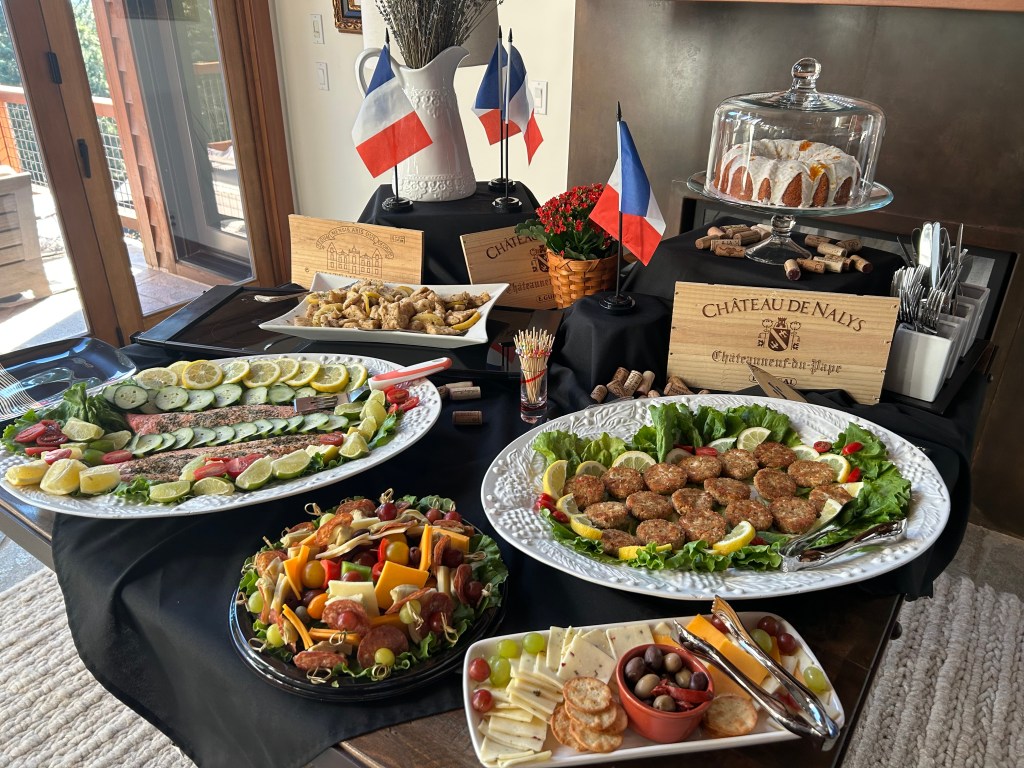
We concluded with a lakeside buffet curated by Julie Rauchle, whose pairings—saline, citrus, and lightly creamy elements—echoed the wines’ structure. A final glass of 2021 Domaine Pinson Chablis 1er Cru Fourchaume offered a graceful bridge from Grand Cru power to Premier Cru finesse—an elegant coda to a rigorous and delicious masterclass.

Learning Outcomes (what members took away)

  • Confidently explain style vs. site using clear levers (MLF/lees/oak) and cues (acid/salinity/chalky texture).
  • Name the seven Grand Cru climats and understand that they comprise the single Chablis Grand Cru AOC.
  • Describe how Kimmeridgian limestone and cool climate shape Chablis: high acidity, mineral line, and length.
  • Articulate why Chablis Grands Crus differ from oak-driven styles like classic California Chardonnay.

As the chapter’s Wine Director, Claire Torbeck, DipWSET, Certified Sommelier, conceived, curated, and presented all of the masterclasses noted above—including 2010 Left Bank Bordeaux, R. López de Heredia, the 2000/2010/2020 Bordeaux comparison, the 2024 Top 100 tasting with pairings, and the Seven Grands Crus of Chablis. From designing curricula and tasting frameworks to sourcing allocations and leading the sessions, Claire oversees the program end-to-end and will continue to develop rigorous, engaging masterclasses for members of the IWFS Lake Tahoe.

The Rise of High ABV Wines: A Challenge for Napa Valley

In the midst of a global shift toward moderation in alcohol consumption, it’s hard not to raise an eyebrow at the persistence of 15.5% ABV wines — particularly from regions like Napa Valley. As consumers increasingly seek balance, freshness, and food-friendly wines, one wonders: Has Napa missed the memo?

“Elegance isn’t weakness; it’s refinement. And that may just be Napa’s next great challenge.”

There was a time when Cabernet Sauvignon from Napa struck a beautiful balance — supple, expressive, and food-compatible. Today, many bottlings surge past 15% alcohol, delivering power, yes — but also a palate burn that lingers long after the last sip. Try pairing that with a classic roast or even a modest charcuterie board, and the match often falls apart. At a recent visit, several producers spoke proudly of crafting powerful, extracted wines aligned to critical scoring systems — still chasing ratings.

So, why the stubborn trend toward elevated alcohol?

It’s partly historical. Napa’s success in the 1990s and early 2000s was built on boldness — ripe fruit, generous oak, and big scores. Critics rewarded volume and weight. But that style, while once fashionable, feels out of sync with the current wine climate — both literally and figuratively.

Climate change hasn’t helped. Warmer seasons push sugar accumulation ahead of phenolic development. Winemakers either harvest early and risk green flavors, or wait and face wines that spiral past 15.5% ABV. Without thoughtful viticulture — canopy adjustments, rootstock selection, maybe even vineyard relocation — the default path is often more alcohol.

“High alcohol isn’t just a number — it’s a sensory force that can overshadow nuance, dull acidity, and exhaust the palate.”

And yet, around the world, we see producers adapting. Burgundy’s elegance remains intact through strategic vineyard management. Champagne producers manage ripeness while preserving freshness. Even in historically warm regions like Priorat, stylistic shifts are underway toward lift and restraint.

To be fair, Napa is not static. Some producers are shifting. We see lighter expressions emerging from mountain AVAs and cooler pockets like Coombsville. But as long as high-alcohol styles are rewarded by critics and expected by collectors, many wineries remain locked into that identity.

In today’s wine culture — where sustainability, health, and food pairing matter more than ever — there’s a growing place for wines that speak softly rather than shout.

More concerning than the sheer alcohol percentage is the imbalance it creates in the glass. Alcohol is inherently sweet, and when combined with ripe fruit or residual sugar, the perception of sweetness intensifies — even in ostensibly dry wines. To compensate, many producers lean into heavier oak usage, which can impart bitterness when layered over high alcohol and dense fruit. Instead of harmony, the wine can feel fragmented — with sweetness, bitterness, and warmth competing for dominance, while acidity, the lifeline of structure and refreshment, gets lost in the mix.

“Balance doesn’t mean less — it means more of what matters: freshness, structure, and soul.”

While Napa often favors an opulent, high-alcohol style in its Cabernet Sauvignon — showcasing ripe fruit, rich tannins, and generous oak — regions such as Burgundy and many cool-climate zones in California emphasize restraint and elegance, particularly in Chardonnay and Pinot Noir. These wines offer finesse, vibrancy, and nuance. They may not shout, but they sing.

Both styles have their place. Opulence appeals to consumers who seek intensity and richness. Restraint caters to those who prefer freshness and delicacy. Importantly, neither style is inherently superior; rather, they reflect differences in climate, vineyard management, winemaking philosophy, and market demand.

With climate change driving warmer vintages and consumers seeking moderation and balance, Napa has an opportunity — and a responsibility — to evolve. We’re already seeing signs of that. A new chapter of Napa winemaking could embrace diversity of style, with both opulent and restrained Cabernets thriving side by side.


Beyond the Rankings: A Fresh Lens on Wine Spectator’s Top 100 Wines of 2024

Each year, Wine Spectator’s Top 100 captures the attention of both consumers and collectors. It’s a list that can simultaneously dazzle and overwhelm—packed with prestige cuvées, sleeper hits, and bottles that vanish from shelves before the ink dries on the rankings. But what happens when we remove the noise of hype and numbers, and instead taste these wines in context: with thoughtful pairings, side-by-side comparisons, and a spirit of curiosity?

That’s precisely what I set out to explore.

For this tasting, I selected eight wines from the 2024 Top 100 list, focusing on availability, diversity of style, and price point. My aim wasn’t to crown a winner, but to create a guided exploration for an engaged group of tasters—most of whom were serious enthusiasts rather than industry professionals. I paired each wine with a dish designed to highlight a structural or stylistic element: acidity, oak, fruit purity, tannin integration, or savory complexity. And rather than ranking wines, we discussed what each wine offered—and how it performed in the pairing.

Thematic Flights, Not Blind Judgments

Instead of organizing wines by region or varietal, I opted for thematic duos that encouraged deeper comparison. This also provided a framework for guests to think more like a sommelier or buyer—beyond label or price.

Flight 1: Beyond the Barrel (Fresh & Unoaked)

Whitehaven Sauvignon Blanc 2023(Marlborough, New Zealand) and Soalheiro Alvarinho 2023 (Vinho Verde, Portugal)

This opening flight explored vibrant, unoaked whites and sparked conversation around the “Anything But Chardonnay” drinker and the broader cultural shift toward leaner, more mineral-driven wines.

Both wines offered brilliant acidity and freshness, but the Soalheiro—texturally rounder and showing more phenolic grip with an enticing floral element—stood up better to the Upside-Down Garlic-Prawn with Lime pairing. The Whitehaven, while aromatically explosive and hailed as a restaurant’s choice for wines by the glass selection, for our purposes, it was more of a conversation wine—guests felt its precision didn’t quite meld with the cuisine.

Flight 2: Parallel Pinots – Oregon vs. Burgundy

Bethel Heights Estate Pinot Noir 2022 (Eola-Amity Hills, Willamette Valley, OR) and Louis Latour Château Corton Grancey Grand Cru 2022 (Côte de Beaune, Burgundy, France)

An eye-opening duo from parallel latitudes but world-apart price points. The Bethel Heights was taut and vibrant, with a steely core of acidity and red-fruited clarity. The Corton Grancey, a blend of four estate Grand Cru parcels aged in 35% new French oak, displayed elegance, mineral precision, and the quiet authority of a wine made to age.

These Pinot Noirs were paired with Duck Breast, Roasted Shiitake Mushrooms, and Raspberry Sauce. While both worked well, the Bethel Heights was seamless and ready to drink. The Corton, still a baby, showed immense promise—but needs time to fully unfurl.

Flight 3: Cult Classic vs. French Darling

Beaulieu Vineyard Georges de Latour Private Reserve Cabernet Sauvignon 2021 (Napa Valley, CA) and Domaine de la Janasse Châteauneuf-du-Pape 2022 (Southern Rhône, France)

This was a dynamic pairing of two powerhouses, each with strong identity and pedigree. The Janasse offered ripe red fruit, pepper, and garrigue with plush tannins and youthful energy. The BV Private Reserve Cabernet showed deep cassis, cedar, and graphite, but its tannins were still firm and in the early stages of integration.

The wines were served with Wild Boar Cannelloni with Tagine Spices, Feta, Braising Liquid, and Thumbelina Carrots. While both wines were still young, the Janasse held up against the weight and sweetness of the dish. The Cabernet, by contrast, became a slightly awkward pairing—as the North African spices in the tagine accentuated the roughness of its unintegrated tannins.

Flight 4: Exploring the B-Side of Italy

G.D. Vajra Barolo Albe 2020 (Piedmont, Italy) and Castello Romitorio Brunello di Montalcino 2019 (Tuscany, Italy)

This final flight offered a compelling look at two iconic Italian appellations through producers known for elegance over extraction. The G.D. Vajra Barolo Albe, with its lifted aromatics and linear frame, showed classic notes of tar, roses, and red fruit. The Romitorio Brunello brought richness, savory herb, and polished tannins—brilliantly composed, if a touch young.

Paired with Soft, Semi-Soft, and Hard Cheeses with Walnuts and Honey, the wines performed admirably, though the food pairing, for the grand finale, could have been more spectacular. While the cheeses and accompaniments were solid, they didn’t elevate the wines as effectively as hoped.

Conclusion: A List Reimagined

Wine Spectator’s Top 100 often arrives with a flourish—scores, scarcity, and a rush to secure bottles before they vanish. But tasting these wines outside the framework of rankings revealed something more meaningful: their ability to connect people, to illuminate place, and to surprise.

While the Wine Spectator Top 100 is published annually as a guide for buyers, I often hear comments that the ratings depend upon how many advertising dollars are spent by the awarded wineries. Or questions like: How can an $18 wine compete with a $200 bottle? The Spectator’s editors claim their selections are based on a blend of:

  • Quality: Based on the 100-point scale
  • Value: The wine’s price vs. quality
  • Availability: Number of cases produced
  • X-Factor: The wine’s story, uniqueness, or significance

Yet, all of these leave ample room for subjectivity—and potential bias. Wine Spectator is not the only publication marketing scores and reviews to help sell wine, but that is part of what they do. Readers should remember that different publications and critics have strengths in particular regions or or have style preferences, but not necessarily in all.

It had been many years since I last attended a Top 100 tasting. I’ll admit—I was pleasantly surprised. While the eight wines we sampled represent only a small slice of the full list, I came away with a renewed respect for the thoughtfulness behind the selections. I gained a clearer sense of the stylistic range being celebrated—something that will only make me a more informed buyer and thoughtful taster. And the food pairings? They offered a welcoming entry point for everyone in the room. After all, we may not all be professional tasters, but we’re all experts at eating.

Some wines dazzled immediately. Others whispered their virtues slowly, unfolding in the glass or shifting with food. A few weren’t ready to meet the moment—not because they lacked quality, but because great wine isn’t always on our timeline. When we move beyond the numbers and expectations, we’re left with what matters most: context, conversation, and discovery.

In this tasting, the highest-scoring wines weren’t always the most memorable. Instead, the wines that provoked the most discussion, sparked curiosity, or transformed with a dish were the ones that lingered in our minds. And isn’t that what great wine should do?

A Guide to Extra Virgin Olive Oil: What You Need to Know

Extra virgin olive oil (EVOO) is more than just a kitchen staple—it’s a flavorful, nutrient-rich ingredient with deep cultural and culinary significance. Whether drizzled over salads, used to finish a dish, or simply enjoyed with crusty bread, choosing the right olive oil makes a difference. But with so many terms and labels, it can be difficult to know what to look for. Let’s break it down.


What Is Extra Virgin Olive Oil (EVOO) and Why Does It Matter?

Extra virgin olive oil (EVOO) is the highest grade of olive oil, known for its superior taste, aroma, and health benefits. To earn the EVOO designation, the oil must meet specific standards:

  • Acidity level: EVOO must have a free fatty acid level of 0.8% or lower. A lower acidity indicates better quality and freshness.
  • Extraction method: It must be mechanically extracted (not chemically) using cold pressing or centrifugation, preserving the natural flavors and nutrients.
  • No chemical refining: Unlike lower-grade olive oils, EVOO is not subjected to chemical solvents or excessive heat, which can alter its taste and nutritional profile.
Why Choose EVOO?

Flavor: It offers complex aromas and flavors, ranging from grassy and peppery to buttery and fruity.

Health benefits: Rich in monounsaturated fats and polyphenols, EVOO has anti-inflammatory properties and may reduce the risk of heart disease and stroke.

Authenticity: True EVOO reflects the region, olive variety, and craftsmanship of the producer, much like fine wine.


What Is a Certified Producer and How Do You Identify One?

When buying olive oil, choosing a certified producer ensures authenticity and quality. Certification guarantees the oil meets strict production and labeling standards.

How to Identify Certified Olive Oil:

PDO (Protected Designation of Origin) or PGI (Protected Geographical Indication) labels: These indicate the oil comes from a specific region and adheres to traditional methods.

  • COOC (California Olive Oil Council): If purchasing from California, look for the COOC seal, which verifies the oil is 100% extra virgin.
  • EU Certification: In Europe, look for DOP or IGP labels, certifying the oil’s origin and quality.
  • Third-party certifications: Organizations like the International Olive Council (IOC) and Extra Virgin Alliance (EVA) certify oils that meet strict chemical and sensory standards.

Tip: Beware of misleading labels like “light olive oil” or “pure olive oil,” which are lower-quality, refined oils.


First Pressed, Cold Pressed, or Both? Does It Matter?

You may have seen labels boasting terms like “first pressed” or “cold pressed.” Here’s what they mean:

  • First pressed: This term traditionally referred to the initial pressing of olives, producing the purest oil. However, modern production uses continuous cold extraction methods, making “first pressed” mostly a marketing term today.
  • Cold pressed: This is the important term to look for. It means the oil was extracted at or below 27°C (80°F), which preserves its aroma, flavor, and nutritional content.

💡 Verdict: Choose cold-pressed oil, as it ensures the oil retains its polyphenols and aromatic qualities. The “first pressed” claim is now largely irrelevant due to modern mechanical extraction methods.


Should You Choose Fresh and Young or Aged Olive Oil?

Unlike wine, olive oil does not improve with age. Freshness is key to both flavor and health benefits.

Why Freshness Matters:

Flavor and aroma: Fresh oil offers vibrant flavors—grassy, fruity, or peppery notes. As it ages, it loses intensity and becomes flat.

Nutritional value: The polyphenols, which contribute to olive oil’s health benefits, diminish over time.

How to Spot Fresh Olive Oil:

Harvest date: Look for the harvest date (not just the expiration date). Ideally, buy oil within 12–18 months of harvest.

  • Best by date: Olive oil is best consumed within two years of production. Fresher is better.

Tip: Avoid “aged” olive oil—it’s not a fine wine. Freshness equals quality.


Olive Varieties: How Many Are There and Which Should You Choose?

There are over 1,000 olive varieties cultivated worldwide, with around 150 used for oil production. Each variety brings its own unique flavor profile.

Popular Olive Varieties and Their Characteristics:
  • Arbequina (Spain): Mild, fruity, and buttery with a delicate profile.
  • Picual (Spain): Bold, peppery, and grassy with high polyphenol content.
  • Frantoio (Italy): Herbal and slightly bitter with a robust finish.
  • Koroneiki (Greece): Peppery, herbaceous, and rich in antioxidants.
  • Leccino (Italy): Mild, nutty, and smooth, often used in blends.

💡 Tip: Experiment with different olive varieties just as you would with grape varietals in wine. Taste preferences vary, and some oils are better suited for drizzling versus cooking.


Packaging Matters: Clear Glass or Opaque Container?

Light, heat, and oxygen are olive oil’s biggest enemies. Exposure to these elements accelerates degradation, reducing both flavor and nutritional quality.

Why Choose Opaque or Dark Glass Bottles?
  • Protects from light: Olive oil should be stored in dark glass, tin, or opaque containers to shield it from UV rays.
  • Extends shelf life: Proper packaging helps retain the oil’s flavor and antioxidant properties.
  • Clear glass risk: Oils in clear glass deteriorate faster, especially under store lighting.

Tip: Always choose olive oil in a dark glass or opaque bottle and store it away from direct light and heat.


Key Takeaways for Choosing Quality Olive Oil

  • Choose EVOO: It offers the best flavor and health benefits.
  • Look for certified producers: PDO, PGI, COOC, or EVA seals indicate authenticity.
  • Go for cold-pressed: It preserves the oil’s nutrients and flavor.
  • Fresh is best: Always opt for freshly harvested oil and check the harvest date.
  • Explore different varieties: Try oils from various olive types for diverse flavor experiences.
  • Dark glass or opaque containers only: This protects the oil from light exposure.

The California State Fair hosts an annual Extra Virgin Olive Oil (EVOO) Competition to celebrate and recognize the finest olive oils produced within the state. Here’s an overview: :

1. Certification of Judges:

The competition’s judges are professional sensory evaluators with expertise in olive oil tasting and analysis. Their backgrounds often include sensory science, production, and related fields. To ensure impartiality, all judges must fully disclose any industry involvement and are assigned only to entries where no conflict of interest could be perceived.

Cal Expo & State Fair

2. Blind Tasting Process:

The olive oils are evaluated through a blind tasting process. This method ensures that judges assess each entry solely based on its sensory attributes without any bias. For example, in the 2025 competition, Head Judge Paul Vossen, along with a panel of 15 expert sensory evaluation judges, meticulously assessed each entry based on aroma, flavor, and other criteria.

3. Eligibility of Entrants:

The competition is exclusive to olive oils that are grown, processed, and packaged in California. This focus highlights the state’s rich olive oil industry and ensures that the awards recognize local producers.

In summary, the California State Fair’s EVOO Competition maintains rigorous standards by employing certified judges, utilizing blind tasting methods, and exclusively featuring California-produced olive oils.

Thanksgiving Wine Pairing Guide: Budget to Luxe Picks

Thanksgiving is a time to gather with loved ones, celebrate gratitude, and savor an indulgent feast. Wine plays a crucial role in elevating the meal, complementing the rich array of flavors on the table. Whether you’re looking for an affordable crowd-pleaser, a mid-range gem, or a luxurious splurge, we’ve got you covered. Here are some recommendations for every budget.

Sparkling Wines: Welcome Friends and Family

Basic: Campo Viejo Cava Brut Reserve ($12-$15)

Cava from Spain is a vibrant, zesty white with citrus and stone fruit notes. It pairs wonderfully with turkey, stuffing, and lighter sides like green beans or salad, offering excellent value. Clean and refreshing finish with a well-balanced acidity.

Mid-Range: Roederer Estate Brut NV ($18-$24)

Roederer Estate sparkling wines are known for their complexity, elegance, and balance, much like their Champagne counterparts. Bright citrus, green apple, and pear dominate, with subtle raspberry nuances from Pinot Noir with a touch of brioche.

Splurge: Pommery Brut Royal Champagne ($55-$60)

Pale golden yellow with a fine, persistent mousse. Light to medium-bodied with a crisp, dry profile. Flavors of citrus, green apple, and white peach. An excellent introduction to the house’s refined Champagne style and a delightful choice for both casual and formal occasions.


White Wines: Perfect for Turkey and Sides

Basic: Pine Ridge Chenin Blanc + Viognier White Blend ($12-$15)

Juicy and refreshing, with flavors of ripe melon, green apple, and tropical fruits like pineapple. Known for its excellent quality-to-price ratio, this blend’s versatility makes it a fantastic pairing for various dishes:

Mid-Range: Hugel Classic Gewurztraminer ($25–$28)

This aromatic white grape is prized for its bold, floral and spicy character making it a great choice for Thanksgiving fare. Aromatic, and slightly off-dry make it a versatile pairing wine.

Splurge: Louis Jadot Chablis Fourchaume Premier Cru ($55+)

This single-varietal chardonnay wine showcases the purity and elegance of Chablis’ terroir, emphasizing freshness and minerality. Flavors of citrus zest, white peach, and crisp apple dominate, but with a creamy richness on the palate. Pure delight!


Red Wines: For the Heartier Dishes – Beaujolais Anyone?

Basic: Georges Duboeuf Beaujolais Nouveau ($10–$15)

Fresh, fruity, and easy-drinking, Beaujolais Nouveau is a classic choice for Thanksgiving. Its light body and vibrant red fruit notes harmonize with cranberry sauce and roasted turkey.

Mid-Range: Chateau des Deduits Fleurie Beaujolais ($22-$25)

Fleurie, known as the ‘Queen of Beaujolais Crus,’ produces wines that are typically lighter, fragrant, and more delicate than some of the other Crus. Floral hints of violets and roses, with subtle earthy and spicy notes such as white pepper and a touch of licorice.

Splurge: Domaine Jean Foillard Morgon Cote du Py Beaujolais ($52+)

Morgon is one of the 10 Crus of Beaujolais, known for producing structured, age-worthy wines. Ripe red and dark fruits, cherry, raspberry, and blackcurrant with earthy notes of wet stone, forest floor, and subtle mushroom.


more red wines: Pinot noir to please

Basic: Four Graces Pinot Noir Willamette Valley ($12-$25)

Medium-bodied with a smooth, velvety texture. Fresh red fruit flavors of cranberry, cherry, and plum and an earthy complexity balanced with vibrant acidity.

Mid-Range: Roserock by Drouhin Oregon Eola-Amity Hills Pinot Noir ($40+)

This wine is an exceptional expression of Oregon terroir, combining the finesse of Burgundy with the distinct characteristics of the Eola-Amity Hills. It’s a refined, balanced Pinot Noir that offers both elegance and depth, making it perfect for those who appreciate both the new world and old world styles of Pinot Noir. Elegant and complex, showcasing a beautiful balance of fruit, earthiness, and subtle spice

Splurge: Louis Jadot Santenay Clos de Malte, Burgundy ($55-$60)

Clos de Malte: This specific vineyard, classified as a Premier Cru, is a monopole (single-vineyard site) owned by Louis Jadot. The terroir of Clos de Malte is particularly favored for its warm, south-facing exposure, ensuring that the grapes ripen fully while maintaining good acidity. A classic Burgundy Pinot Noir, offering a beautiful balance of fruit, earth, and spice.


Dessert Wines: The Grand Finale

Basic: Croft Reserve Tawny Porto ($20-$25)

A classic, well-balanced Tawny Port with rich dried fruit, nutty flavors, and a smooth, velvety texture. Reserve Tawny Port: This is typically a blend of Ports aged in oak for around 5 to 7 years, though it can vary slightly.

Mid-Range: Graham’s 10 yr. Tawny Port ($30+)

The Graham’s 10 Year Old Tawny Port is a standout in the category of aged Tawny Ports, offering a refined balance of fruit, nutty flavors, and the signature complexity that comes with extended aging in oak barrels. This Port is aged in oak barrels for a minimum of 10 years, which gives it more time to oxidize and integrate the oak’s influence. Over this extended aging period, the wine develops more complex flavors, including nutty, caramel, and dried fruit notes. It becomes smoother, with a more pronounced aged character compared to Reserve Tawny.

Splurge: Graham’s 20 yr. Tawny ($70+)

Graham’s 20 Year Old Tawny Port is a luxurious, complex wine that exemplifies the finesse of long aging in oak barrels. With its rich flavors of dried fruit, caramel, nuts, and spices, it represents a perfect balance of sweetness and acidity. This Tawny Port offers an elegant, velvety texture and a long, satisfying finish, making it an ideal choice for special occasions, or as an after-dinner treat. It is particularly delightful when paired with rich cheeses, decadent desserts, or simply enjoyed on its own.


Tips for Thanksgiving Wine Pairing

  1. Offer Variety: Provide at least one white, one red, and possibly a sparkling wine to cater to diverse tastes.
  2. Consider Acidity: Wines with higher acidity pair well with Thanksgiving dishes’ rich and sweet flavors.
  3. Chill Reds Slightly: Serving reds slightly cooler than room temperature helps highlight their fruitiness (think 60-65 degrees as the wine will warm as it sits in the glass).
  4. No tannins: Tannic wines, which are wines high in tannins (like Cabernet Sauvignon, Nebbiolo, or Syrah), tend not to pair well with many traditional Thanksgiving foods. For Thanksgiving, wines with lower tannin levels and more balance—such as Pinot Noir, Gamay (Beaujolais), Chardonnay, or Riesling—tend to be more successful. These wines complement the meal’s diverse flavors without overwhelming any single component, making them versatile choices for a wide range of traditional Thanksgiving dishes.

No matter your budget, the right wine can transform your Thanksgiving meal into an unforgettable celebration. Cheers to making memories and savoring every sip!

Happy Thanksgiving!

Amador County Commercial Wine Competition 2024 results…

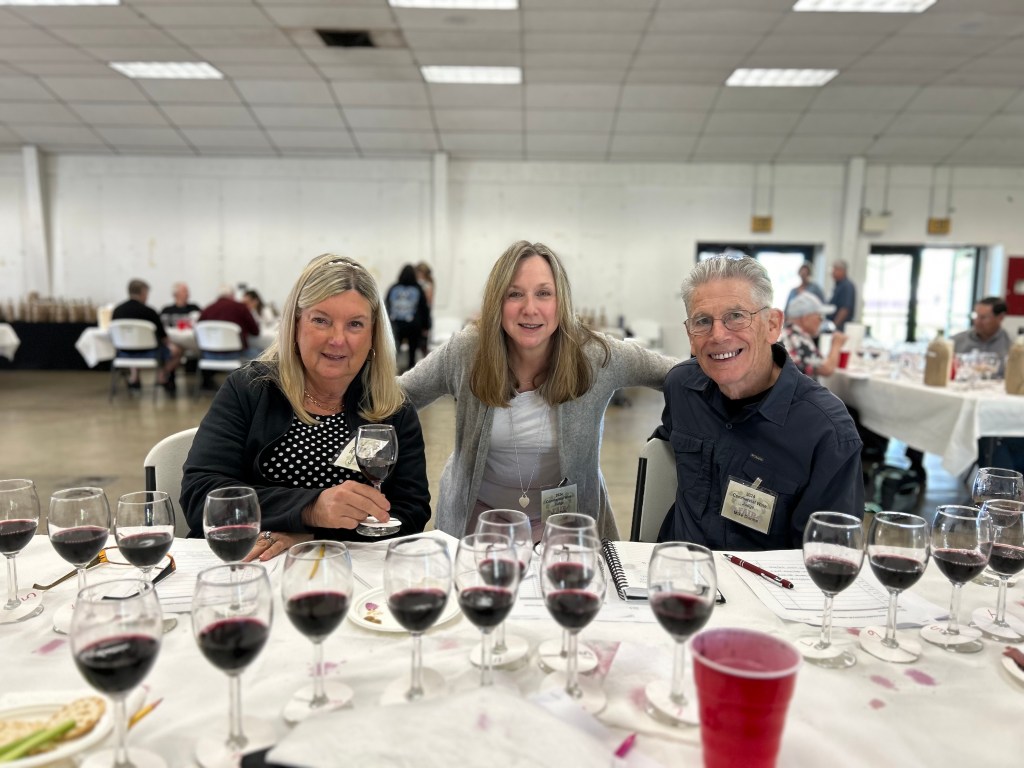
It’s great to judge these AVA type competitions as it gives a good snapshot of the producers and how they stack up against their fellow wineries. The competition is ‘blind’ (meaning the judges have no idea of the winery that produced the wine in the glass). Each wine is identified by a number and scored on the merits of what is tasted in the glass. However, we do know the ‘category’ such as Zinfandel, Cabernet Sauvignon, or Other White Blends, for example.

Our panel consisted of a seasoned winemaker (with a Bachelor’s degree in Enology – the science of winemaking), an acclaimed wine writer and author, and me (I hold the DipWSET certification, am a Certified Sommelier, and an experienced wine judge). We worked together seamlessly and we each came away with some nuggets of wisdom from each other. There is always an ‘A-HA’ moment…

The night before the competition, Casino Mine Ranch Winery hosted the judges for a salad and pizza dinner with an assortment of freshly baked pizzas prepared in their amazing woodburning pizza oven. They were delicious and a wonderful pairing with their line-up of tasty wines. (Note: Casino Mine Ranch also had wines entered in the competition, but they did not offer tastings of any of the entries for this event.) Visit their website at: https://www.casinomineranch.com/visit-us/

Here is a picture of the beautiful new winery building and the sitting area overlooking the water at Camino Mine Ranch…

The results of the competition have not yet been posted to the Amador County website, but here is a link to an article that tells a bit about some of the winners of this year’s competition: https://www.ediblemontereybay.com/blog/in-praise-of-barbera-amador-wine-competition-winners/

FAIR RESULTS NOW POSTED: https://amadorcountyfair.com/2024-fair-results

I’d like to also give a ‘shout out’ to Rest, a Boutique Hotel, where we stayed the night before the competition. The rooms are lovely and very comfortable, we enjoyed the fire pit with a glass of wine before turning in for the night, and the staff was incredibly attentive to every detail. Breakfast the next morning was wonderful, and I cannot wait to return. Their website can be found here: https://www.hotelrest.net/

After the competition, we dined at Taste, an upscale restaurant a few doors down from Rest. It was a lovely surprise to find such quality in the Foothills, with creative dishes, and a wine list that included Foothill wines but also International selections. Their website can be found here: https://www.restauranttaste.com/

If you are looking for a get-a-way, Amador County has lots to offer, although truly their wines are the star of the show. Get out there and try some of these award winning wines!

What sweet, fortified wine are you serving with Christmas dessert?

As I am a first generation American with Hungarian heritage, I generally serve the highly sought after Tokaji wine, famous for its sweet, fruity, and acidic character.  It is such an interesting grape!  It is thick skinned but, as it ripens, the skins stretch and thin allowing the sunlight to penetrate, increasing the concentration of sugar.  The sweetness level can vary depending upon how much residual sugar the winemaker decides to leave in the wine, how botrytized the grapes become and how the wine is ultimately blended.  The sweetness is measured in ‘Puttonyos’ on a scale from 1 to 6 which is noted on the label.  The most common is 5 Puttonyos.

Now, when I say ‘sweet’, I do not want you to think of sweet as in cloying, grocery store, birthday cake icing.  It is a sweet wine, for sure, but with a backbone of acidity that makes the wine bright and lively on the palate with a hint of minerality.  The elevated acidity is the key to a wine with great balance.

Stylistically, Tokaji shows apricot, orange zest and honey on a core of earth and minerality. I love to serve this with an Almond Tart topped with Mascarpone.  It is a true gift from the vineyard.  The Royal Tokaji Wine Company makes a splendid product, generally found in 500 ml bottles (vs. the standard 750 ml size), and the price ranges from $45 to $70 depending upon vintage.

Sauternes is another excellent choice.  It too is a sweet wine, rich and honeyed on the palate and shows a bit more fruit than the Tokaji wine. Foggy condition in the region (Sauternes is south of the city of Bordeaux along the Garonne River) can create the perfect conditions for the growth of Botrytis, a mold that pulls water from the grapes, causing them to shrivel on the vine (think raisins) and gives the wine its signature richness.  The grapes have concentrated sugars and flavors which result in sweet, intensely flavored wines.

Stylistically, Sauternes have notes of apricots, honey, and peaches but with a slightly nutty element.  Foie gras is a classic match for these beautiful wines.  While the most famous producer is Chateau Y’quem (price point of $200+ at the least expensive), Chateau Suduiraut is a favorite of mine and more modestly priced (generally in the $50 to $75 range depending upon vintage) and always seem to please.

Port is another all-time favorite and probably better recognized in the mainstream wine drinking community.  It is crafted in varying styles and quality.  The grapes are grown in steep vineyards that wind along the Douro River in Northern Portugal all the way East toward the Spanish border.  Once the grapes are harvested, they are taken to the winery, placed in Lagares (large, shallow tanks made of granite) for fermenting and extraction.   This is accomplished by the traditional process of ‘foot treading’ which extracts color, tannin, and flavors from the grapes.  Using the human foot prevents the breaking of seeds which can impart bitter tannins into the must.  This practice is still used by some premium and super premium port producers, although modern lagares have been created that use silicon feet to replicate the traditional human foot treading.

The wine is fortified which stops fermentation and it spends its first year in the Douro.  The maturing wine is transported (once upon a time in boats on the Douro) to Vila Nova de Gaia across the river from Oporto for further ageing.  Many styles of port are crafted from a simple Ruby or Tawny port (no vintage or age indication on the label) to high quality Vintage/Late Bottled Vintage (LBV) ports to Tawny Ports/Colheita with an indication of age and celebrating their oxidative life in the barrel. 

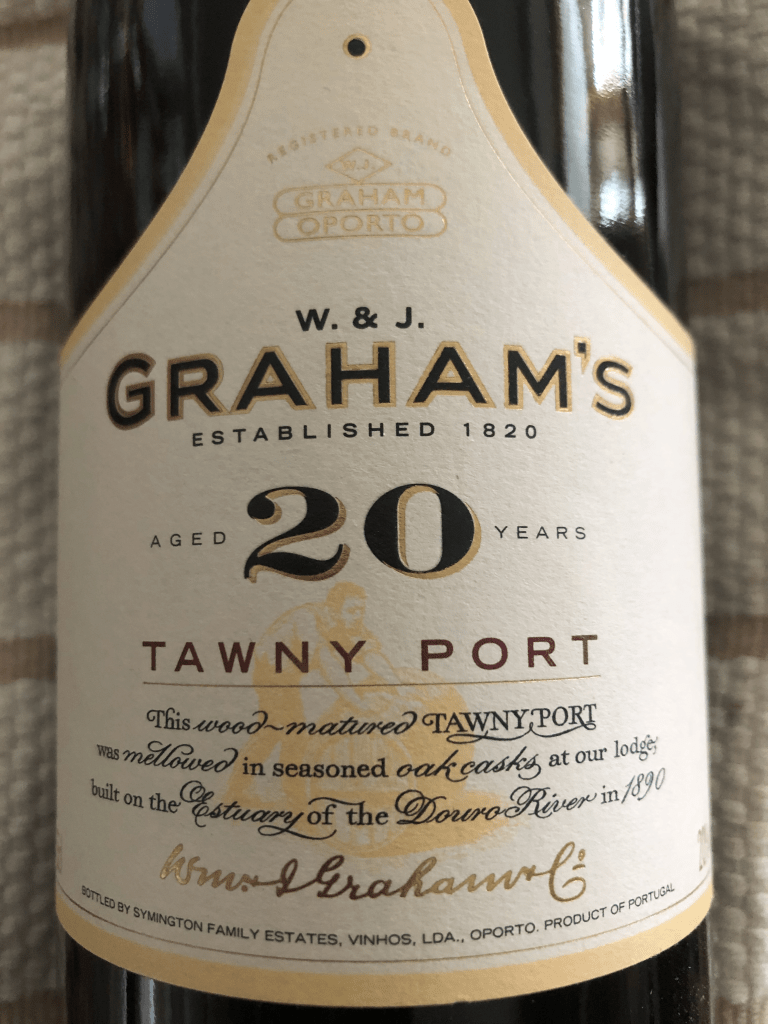
This year, we will be enjoying a 20 Year Graham’s Tawny Port with our Christmas dessert.  This tawny wine was aged in neutral wooden barrels called ‘pipes’ which allows controlled exposure to oxygen for a period of time so the alcohol integrates. The once fresh fruit aromas and flavors take on dried fruit characteristics and oxidative aromas, bringing enticing aromas and flavors of caramel and nuts to the wine.  

While the bottle is labeled as aged for 20 years, this does not mean the minimum age of the wine in the blend is at least 20 years old.  A 20 Year Tawny Port is made up of wines younger and older than the specified age.  In reality, the wine is tasted by a panel within the IVDP (the governing body that supervises wine producers in the region) and this organization does a taste test to ensure the wine has characteristics indicative of a wine that age to be labeled as such.

Because I could not wait, I decided to taste the wine before serving at Christmas and as anticipated, this is a particularly good wine.  Although port has high alcohol, the generous primary stone fruit aromas/flavors of plum and apricot and the tertiary elements of caramel, raisins, nuts, orange peel with a hint of cinnamon, are expressive and show incredibly good balance and an elevated palate intensity just short of pronounced.  The acidity is juicy and complements the soft tannins ending in a complex ripe/dried fruit and smooth finish.  I know this is going to be a very tasty accompaniment to the homemade Rum Bundt Cake! 

Whatever you choose to serve at your Christmas dinner (and there are Sherry, Madeira, and Vin Doux Natural wines out there that I have not touched upon), have some fun in choosing, be adventuresome, and celebrate good food, family, and friends. 

Here is to a wonderful and COVID-19-free 2021.

Merry Christmas!

Everyone loves a puppy…

It is no secret that charities are hurting in 2020 with no ability to host their typical fundraising events.  Near and dear to my heart is the Humane Society of Truckee Tahoe at https://hstt.org who lovingly care for homeless pets and make finding them forever homes their mission.  The annual Black Tie and Tails gala, their main annual income generating event, had to be cancelled due to Covid-19.  A real blow to an organization that depends upon donation dollars.

Not only do we love supporting this worthwhile organization, but the gala was sorely missed by our ‘bubble’ of friends, so we decided to take matters into our own hands.  Crafting an evening of wine, food and friends, where everyone dressed to the nines, cooked a fabulous dish to share and provided appropriate wines to pair, we celebrated the Humane Society’s efforts with a bit of a catch.  Each attendee was asked to donate a minimum amount per person (in addition to their food and wine contributions for the evening) and some gave much more, sweetening the pot by finding ‘matching’ contributions from their employers. 

While our dinner group was small and in a private home, those that could not attend generously donated to sweeten the pot.  In the end, we managed to have a mid-November celebration of food, friends (both furry and human) and were safe inside our ‘social bubble.’   And yes, as a group of wine and food lovers, it was a fabulous night of wonderful food and delicious wines!

I won’t disclose the names of these ‘angels’ or the amounts contributed, but our small gathering provided a nice contribution of $ 6,100 which was then combined with generous corporate matches totaling $ 2,850 for a grand total of $ 8,950.

 I will put out the challenge to have some fun being an organization’s ‘angel’ in these dark times.  While currently we are all under the SIP order once again, Zoom is still out there and we are all looking for some fun and distraction.  Be creative and generous in any way you can.   Merry Christmas and Best Wishes for a return to normal in 2021.

Cheers!